Skip to content
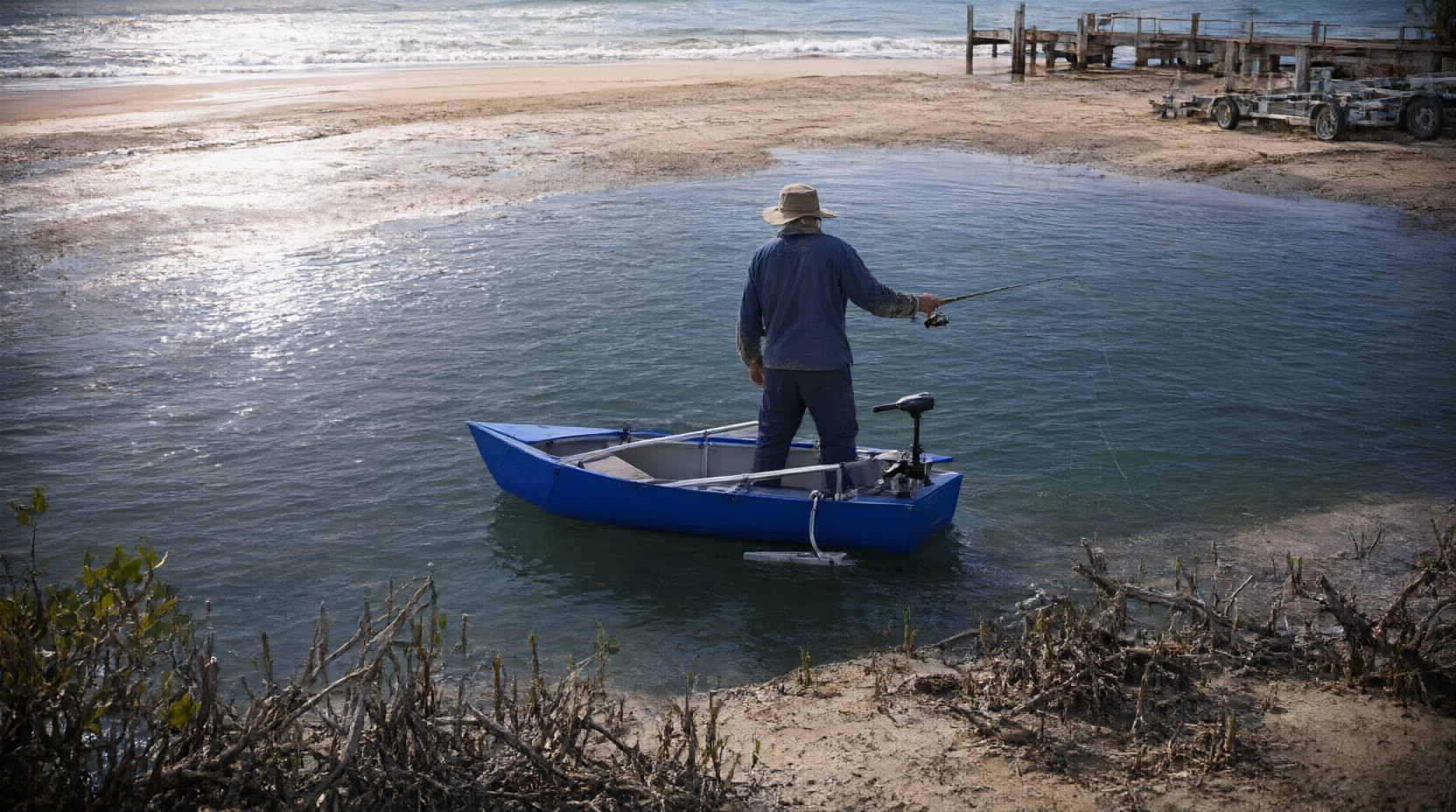
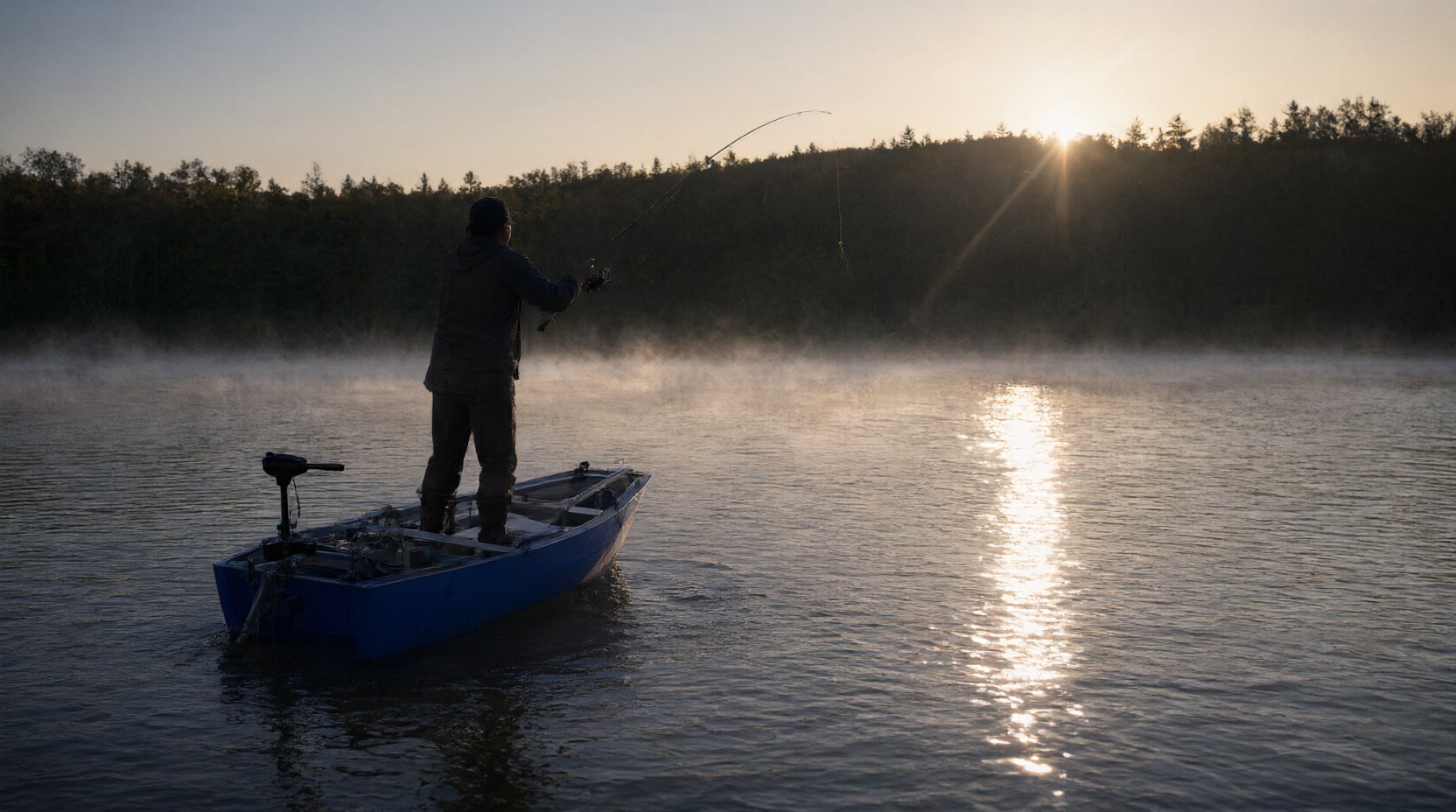
A folding hard-hull fishing boat on a calm estuary at first light, with an angler standing on the rigid deck casting a lure

The boat that folds rigid

The rigid boat that folds flat and never inflates.

A four-layer composite hull with heat-welded fold creases, stiffened by a three-longitudinal, four-transverse aluminium frame. No inflation to pump, no chambers to leak. Rigid enough to stand and cast from. It folds to 100 × 60 × 32 cm and rolls on detachable wheels.

5–6min

Fold to boat, one person

2–3min

Pack down

0pumps

No inflation, ever

4layers

Fused composite hull panel

Why anglers swap out of inflatables

Inflatable boats fail anglers in four predictable ways

Inflatable boats are soft. A stray hook or a reef edge can puncture a chamber. You spend minutes pumping before you fish, then more time topping up as air leaks. The floor flexes underfoot, so standing to cast is a balance test. After a day on the water, a wet inflatable is hard to dry and pack. Anglers want a rigid hull that folds, not a balloon that demands maintenance.

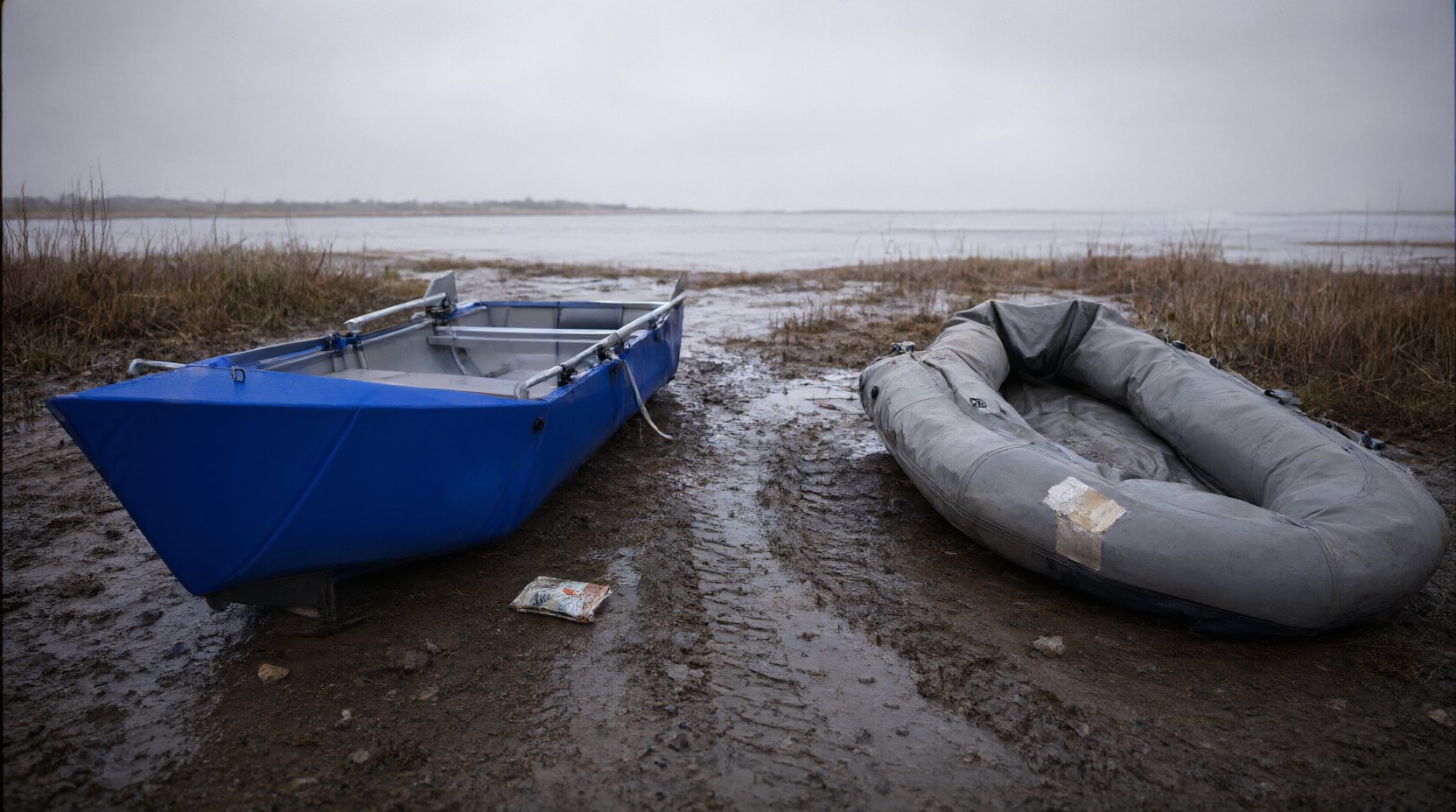
Comparison on calm water between a rigid folded-hull boat holding its shape and an inflated PVC boat flexing underfoot
Rigid composite hull, left. Inflated chamber underfoot, right.
  • 01

    Puncture risk

    A single hook point or reef scrape can breach a chamber and end your day.

  • 02

    Pumping time

    You inflate before launch and top up on the water. Air pressure drops as temperatures change.

  • 03

    Unstable floor

    Soft floors flex underfoot. Standing to cast becomes a balance test, not a fishing position.

  • 04

    Hard to dry

    A wet inflatable traps moisture in folds. Packing it damp invites mildew and shortens its life.

Construction

Four layers, heat-fused, no rivets

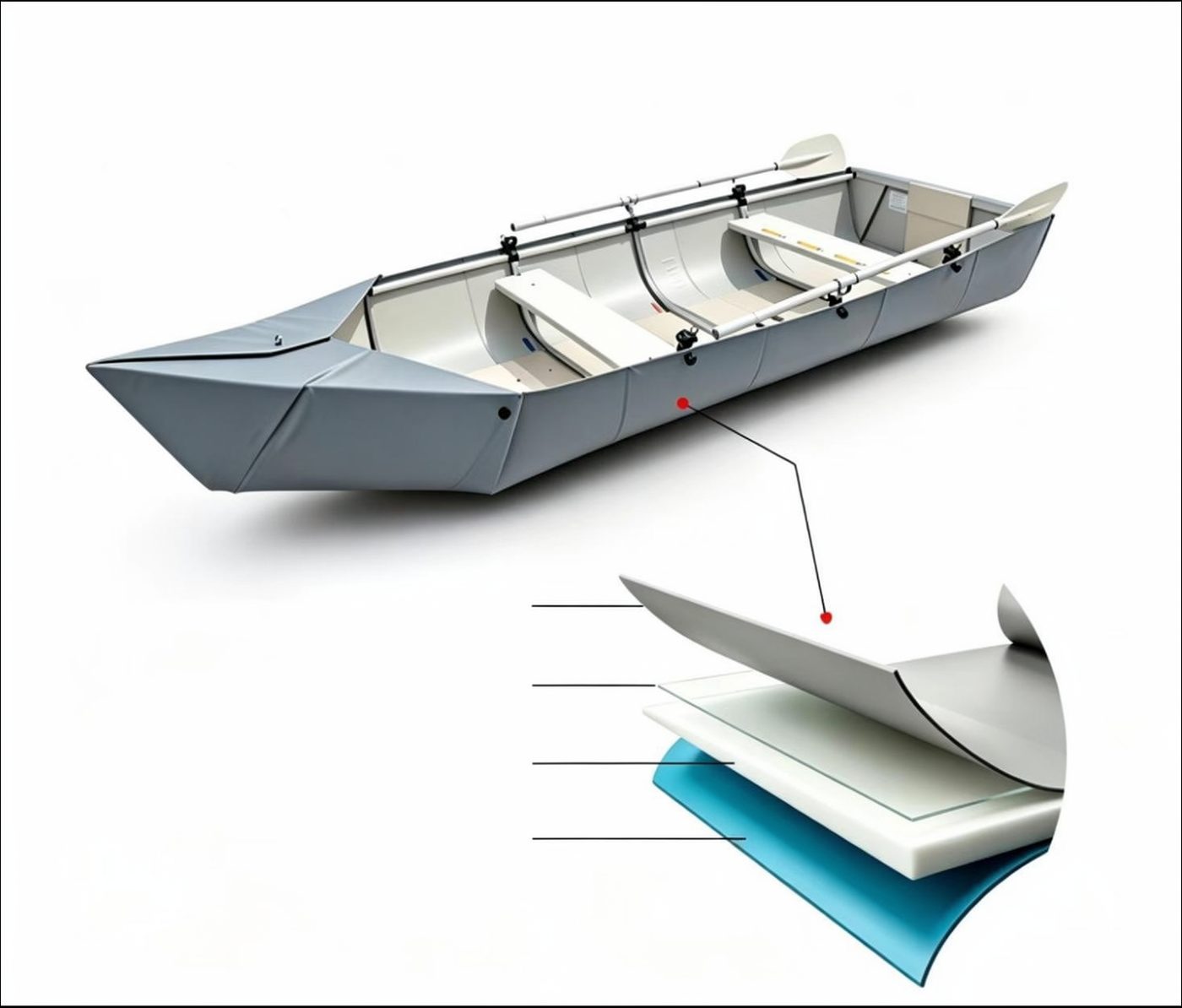
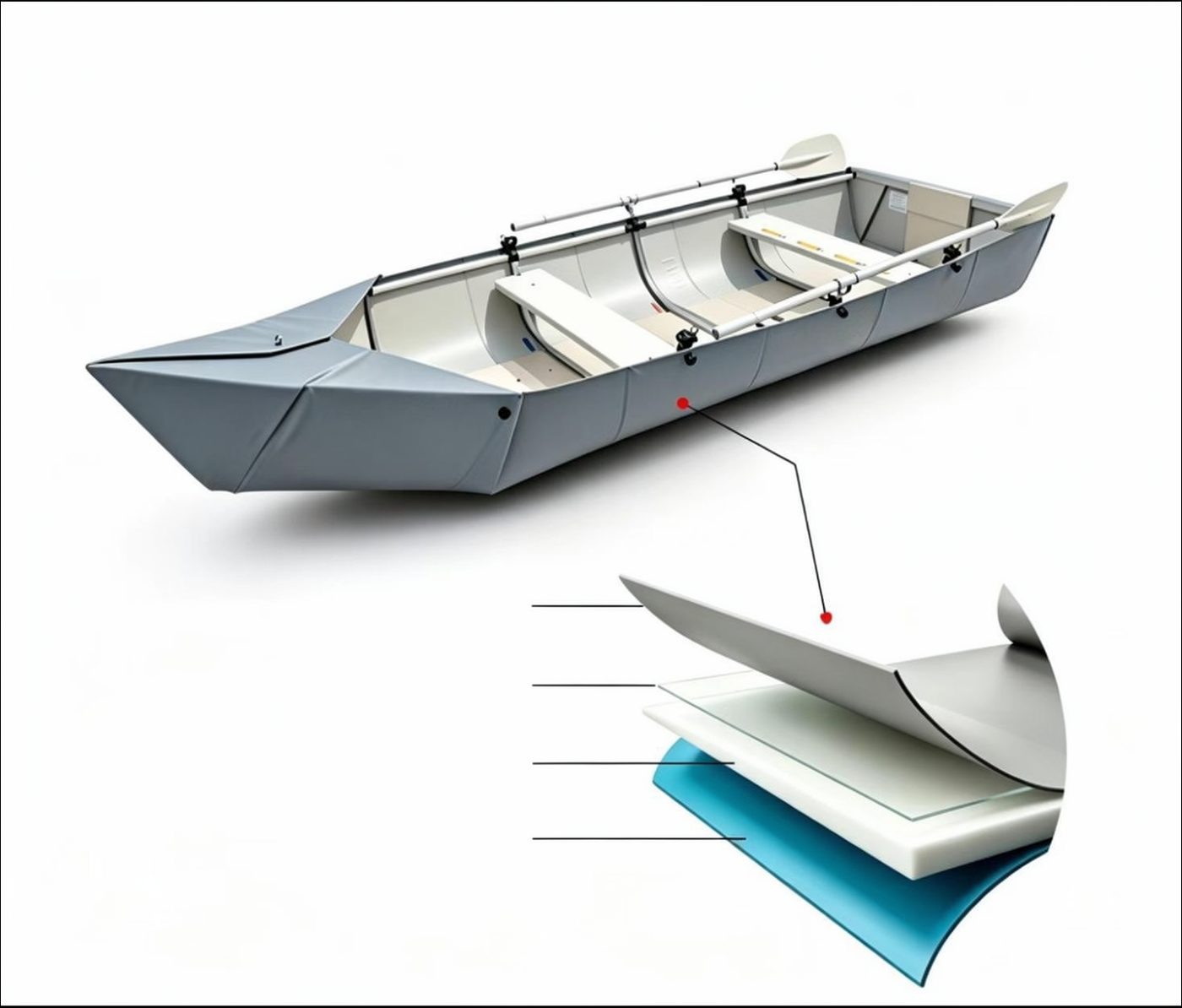
The hull is a bonded four-layer sandwich built around a fibre-reinforced polypropylene core — impact resistant, tolerant of high and low temperatures, corrosion resistant and stiff. The fold creases are not sewn or riveted: 6-layer and 9-layer PVC tarpaulin is fused into the hull with high-frequency heat welding, so the joints are integral to the panel rather than added to it. A leak would have to pass through the whole stack. The floor is rigid enough to stand and cast from.

1

Outer PVC tarpaulin

The outermost layer. Mesh-reinforced PVC that takes abrasion, UV and the first hit from docks or rock.

2

Waterproof adhesive layer

Bonds the tarpaulin to the core so the panel behaves as one sheet rather than layers that can separate.

3

Fibre-reinforced polypropylene board

The structural layer. Thickened, tough and stiff — this is what carries your weight and holds the hull shape.

4

Inner PVC tarpaulin

Mesh-reinforced PVC inside the hull, sealing the core from bilge water and repeated loading.

4

Total hull panel

Four bonded layers with heat-welded fold creases. No rivets or stitching in the skin.

Four layers. Numbered from the outside of the hull inwards.

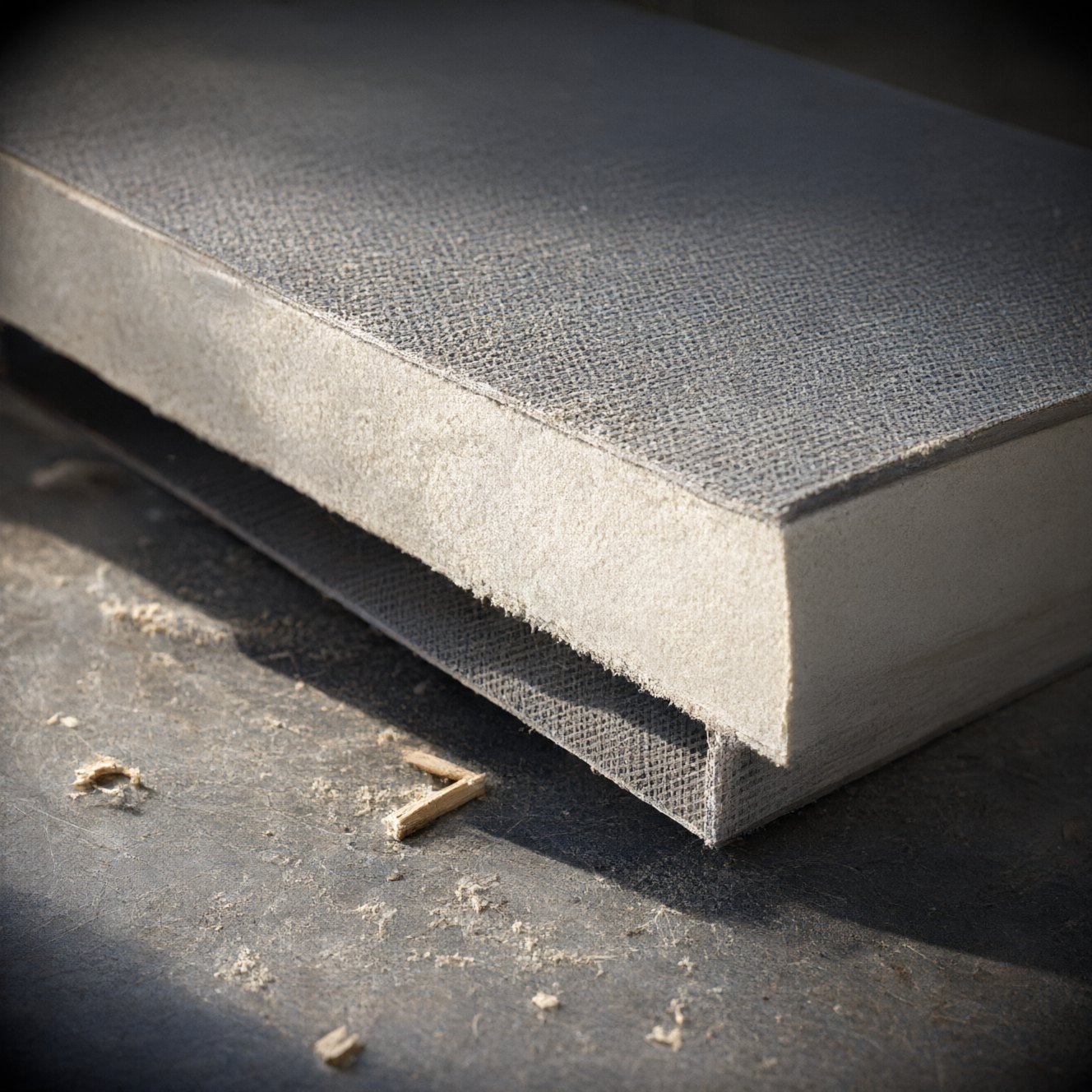
Cross-section of the four-layer composite hull panel with a fibre-reinforced polypropylene core
Cut edge of the composite panel: skins either side of the rigid core.
Angler standing upright with both feet on the rigid deck of the folding boat, showing the hull does not flex
Standing with your full weight on the deck, in sheltered water.

Engineering standards

Welded creases, bolted frame

Most folding boats are held together with pop-rivets driven through soft panels. Those joints loosen, the hull flexes underfoot like a waterbed, and every rivet is a potential leak path. This hull is built differently: a four-layer composite panel with heat-welded fold creases, and a three-longitudinal, four-transverse aluminium alloy frame bolted to the hull as a rigid skeleton. The result is a floor you can stand on, a hull that keeps its shape under a trolling motor, and fewer failure points to watch. The frame is a bolted structure by design — it is what makes the boat stiff enough to stand in, and what lets it fold back down flat.

  • Marine ply floor

    Bottom board is marine-grade birch plywood, cut to sit flat and spread your weight across the hull.

  • Motor-ready transom

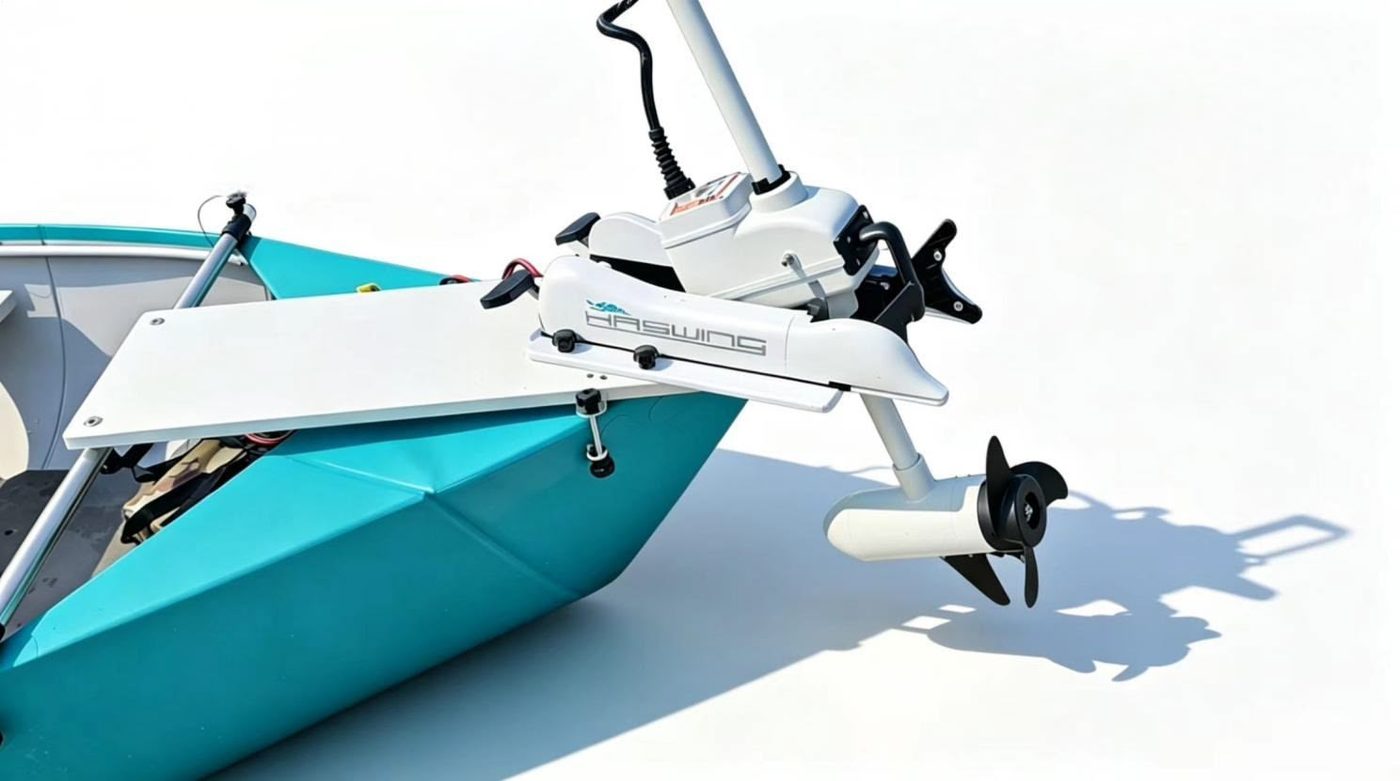
    Transom accepts a small outboard or electric trolling motor, so you can cover water without rowing.

  • Stand and cast

    The rigid composite panel holds shape underfoot, so you can stand, turn and cast without the floor sagging.

  • Trolley transport

    Folds to roughly 100 by 60 by 32 cm and rolls on detachable wheels, carrying like a loaded trolley.

  • Patch it and go

    There is no air chamber to keep sealed, so a gouge in the hull does not end the day. Clean the area, press on a repair patch, and you are back on the water in minutes.

Models

Three lengths, one rigid hull

Three hull lengths cover solo river work, one-angler lake days and two-person trips. Same rigid four-layer composite hull on each. You choose length by how much room you need and how many people fish.

L-22 Solo,
tight water
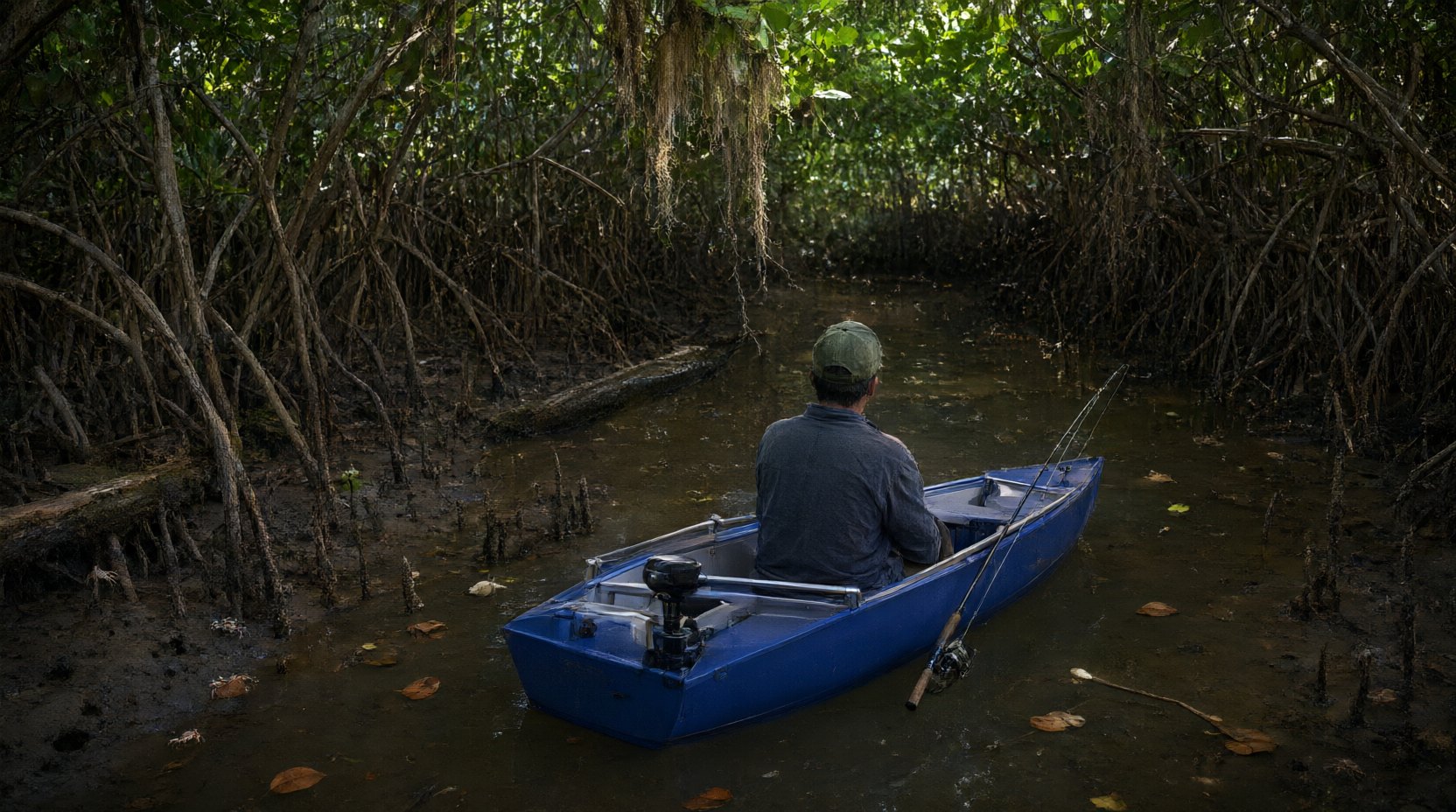
The L-22 folding fishing boat working a narrow tidal creek, the type of tight water it is sized for

Solo angler working narrow rivers, creeks and small dams where a ramp is not an option.

Length
2.15 m
Beam
1.14 m
Hull depth
0.35 m
Hull only
18 kg
Bottom board
9.5 kg
All in
39 kg
Anglers
1

Weights as supplied. Hand-measured; small variation is normal.
L-27 One angler,
full kit
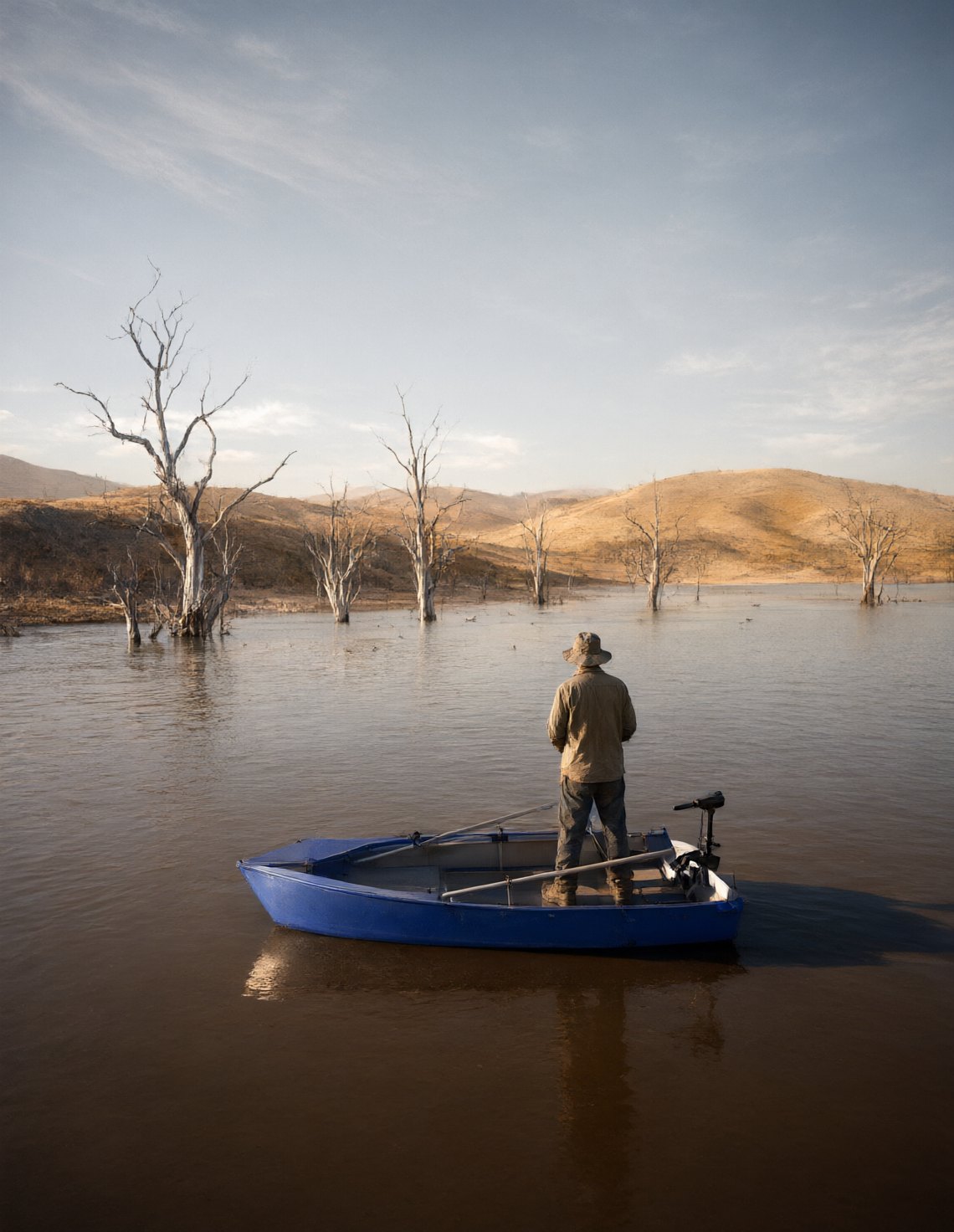
The L-27 folding fishing boat fished solo on a still inland dam

One angler with gear to spread out, casting standing up on bigger dams and open estuaries.

Length
2.65 m
Beam
1.20 m
Hull depth
0.35 m
Hull only
21 kg
Bottom board
12 kg
All in
48 kg
Anglers
1, with room

Weights as supplied. Hand-measured; small variation is normal.
L-31 Two up,
standing room
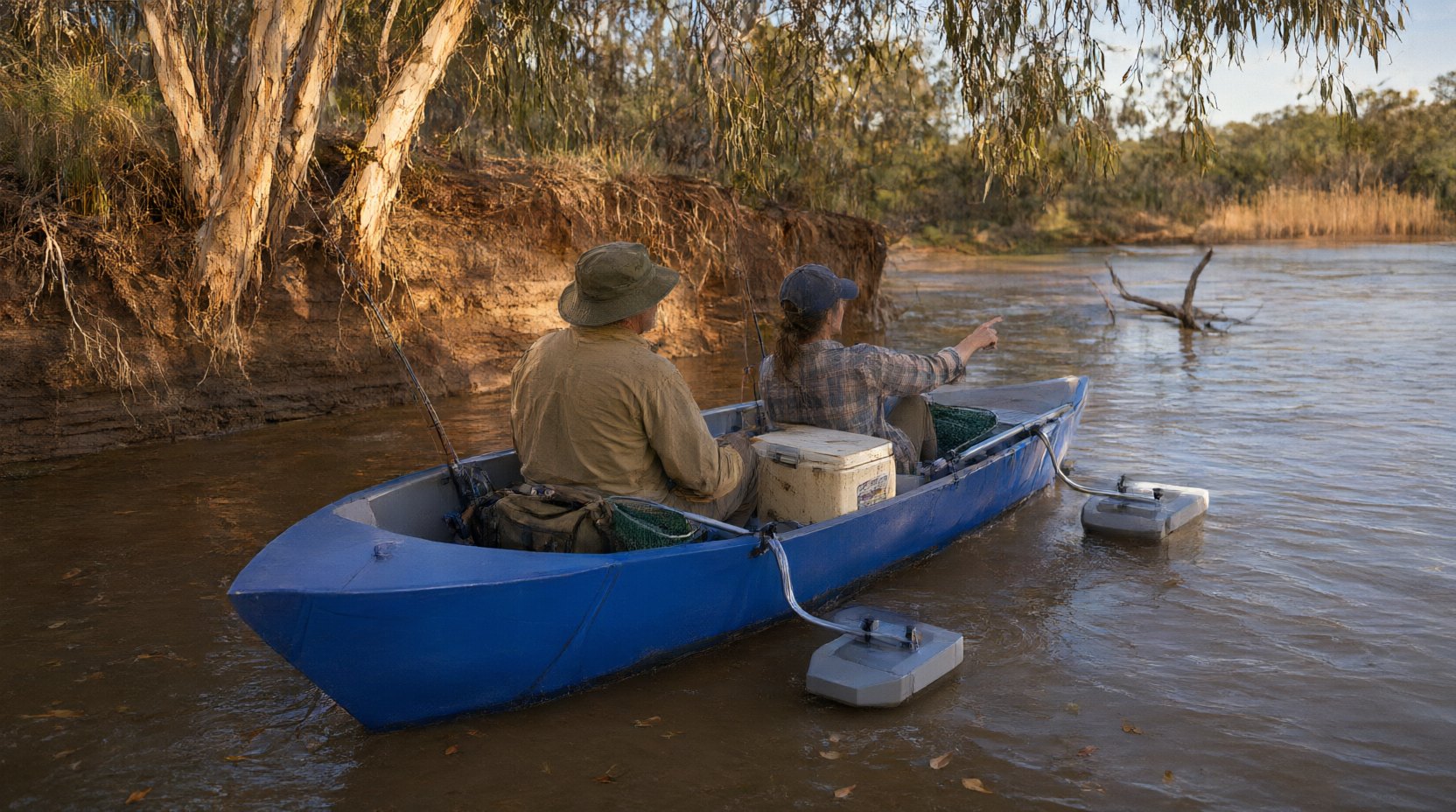
The L-31 two-person folding fishing boat with two anglers seated and fishing rods in holders

Two people, two rods, and enough length to fish lakes, bays and wide rivers comfortably.

Length
3.10 m
Beam
1.20 m
Hull depth
0.35 m
Hull only
23.5 kg
Bottom board
14.3 kg
All in
53.5 kg
Anglers
2

Weights as supplied. Hand-measured; small variation is normal.
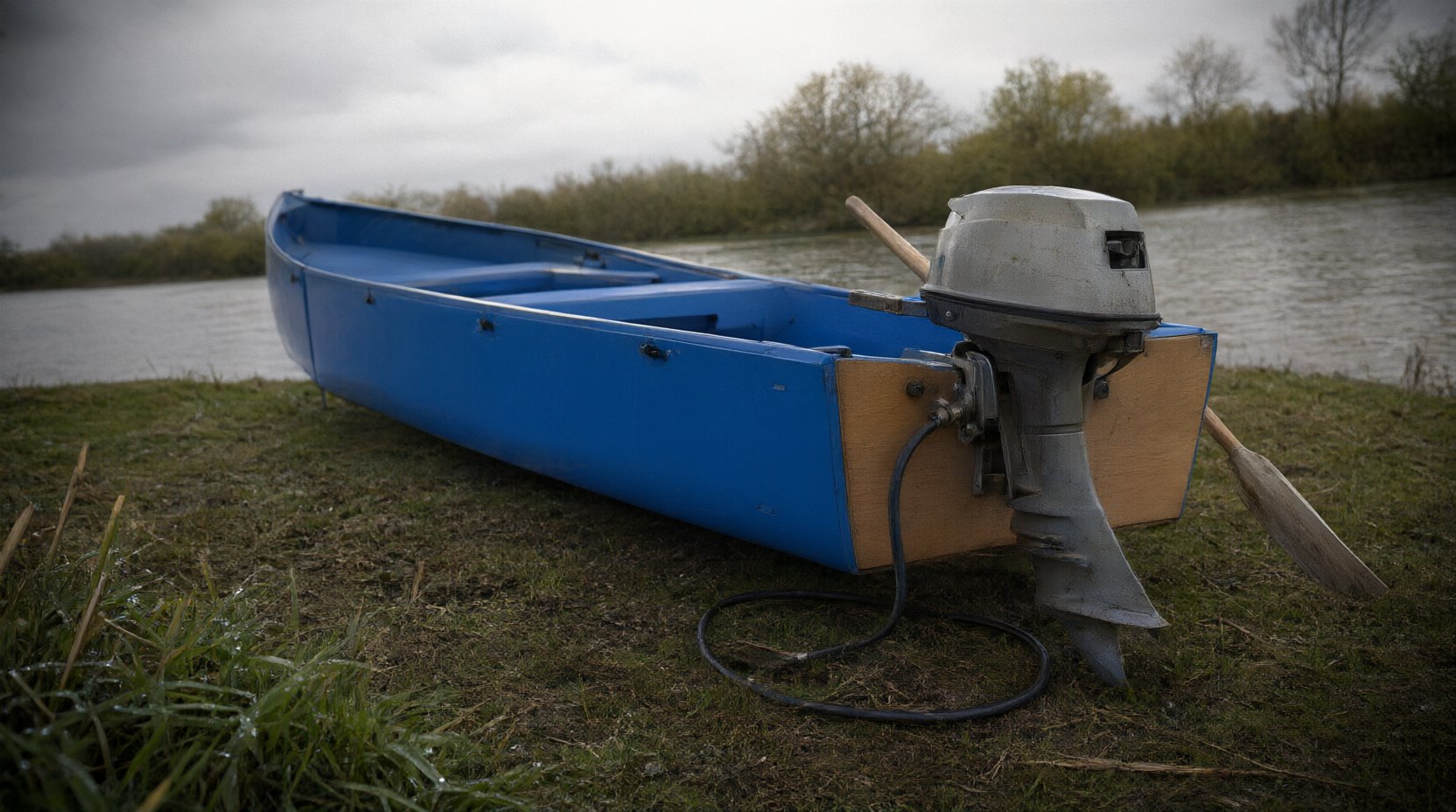
Stern of the folding boat showing the marine plywood transom board with a small outboard motor mounted
Marine ply transom, rated for a small outboard or electric trolling motor.
Boat data plate Fill from your own build
Hull construction
4-layer composite + alloy frame
Hull panel
Four layers
Bottom board
Marine ply
Max persons
1–2
Folded size
100 × 60 × 32 cm
Transport
Detachable wheels
Max load
280 kg usable (600 kg design)
Motor mount
Electric or petrol, unit ≤ 20 kg
Buoyancy rating
[basic / level]
Australian buyers: check the Australian Builders Plate requirement New and imported recreational boats supplied in Australia need an Australian Builders Plate showing flotation, maximum load and maximum power. If we are the importer, we supply and fit it. If you import your own boat, that duty sits with you. Ask us and we will tell you exactly which figures we can certify.

Getting there

Folds small, rolls like luggage

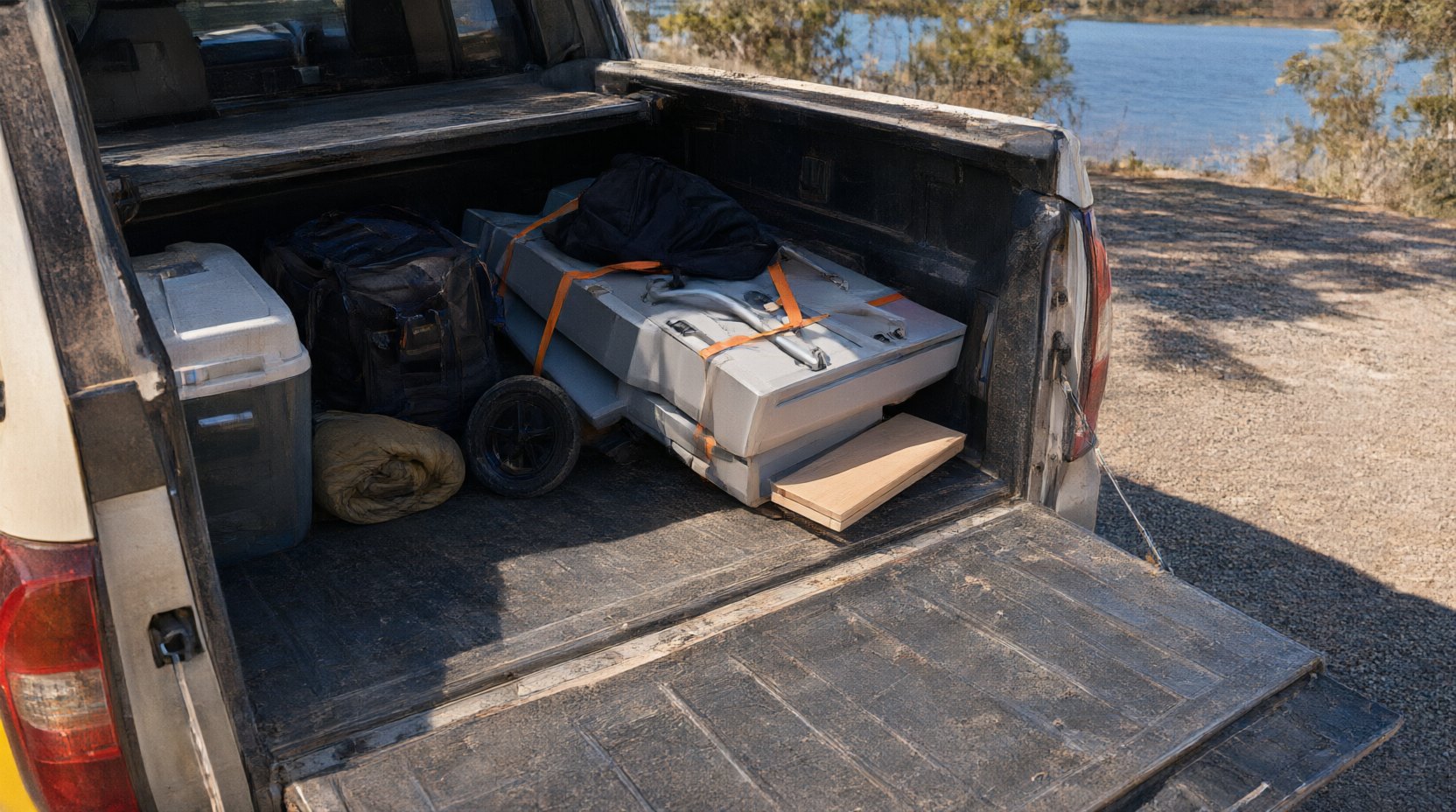
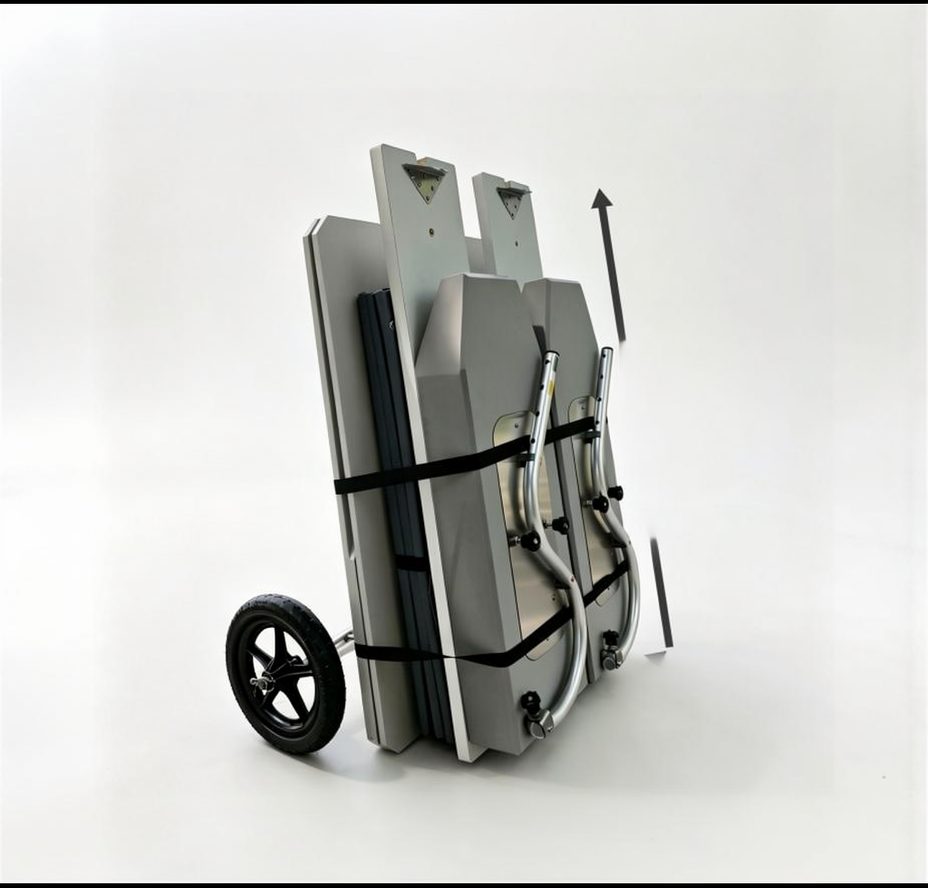
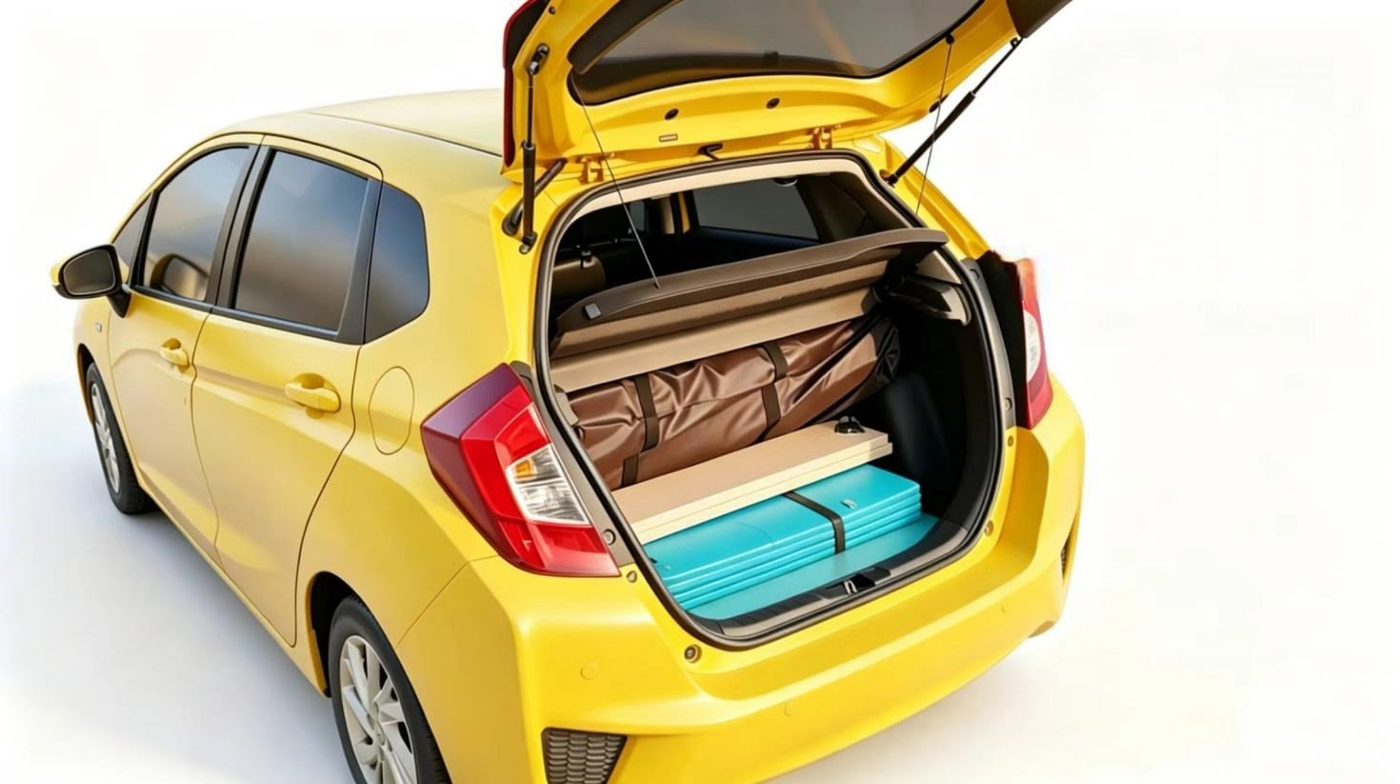
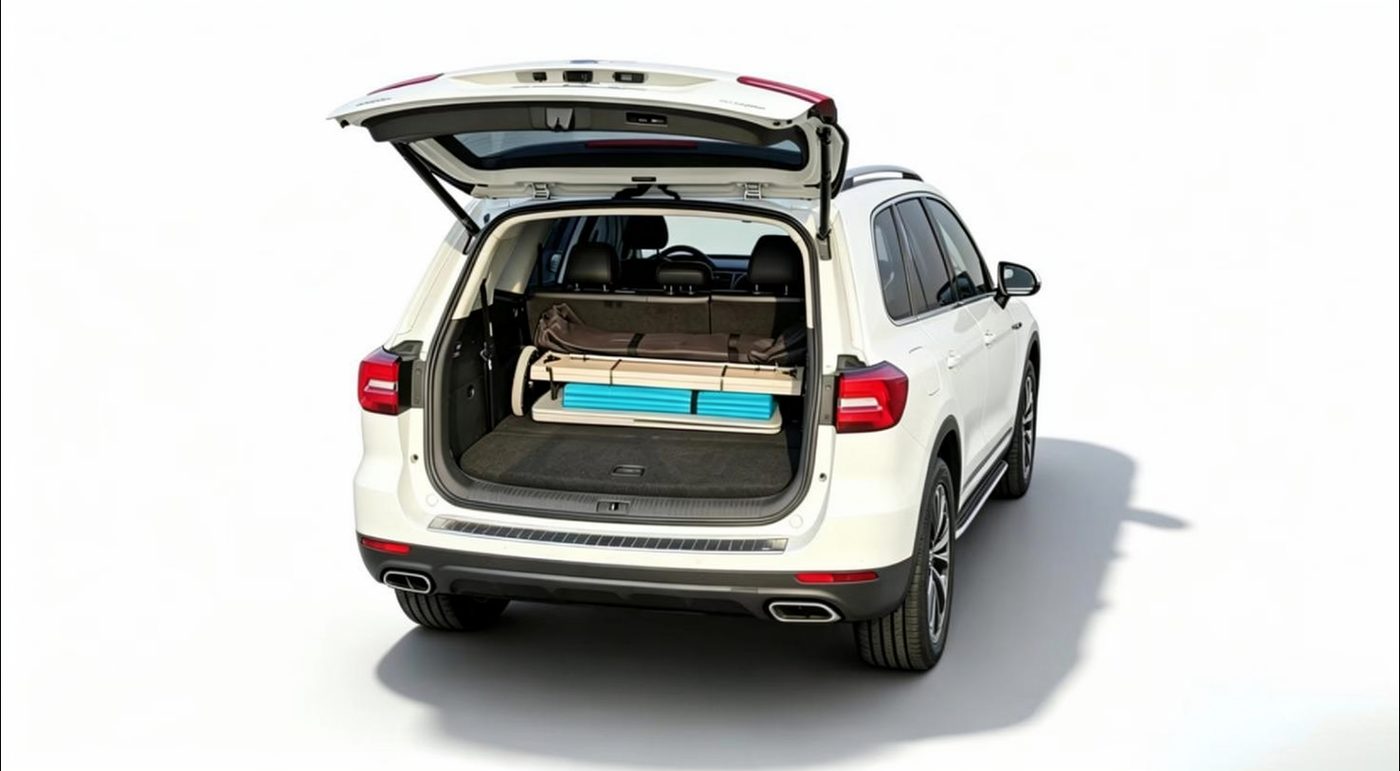
Folded, the hull measures about 100 cm × 60 cm × 32 cm. That fits a sedan boot or an SUV tray with room left for rods and a tackle bag. The detachable wheels clip on so one person can pull the whole package like luggage from the car to the water.

The fully folded boat and its bottom board packed flat in the cargo tray of a pickup, taking up a small footprint
Folded hull and board in a ute tray, with space left over.
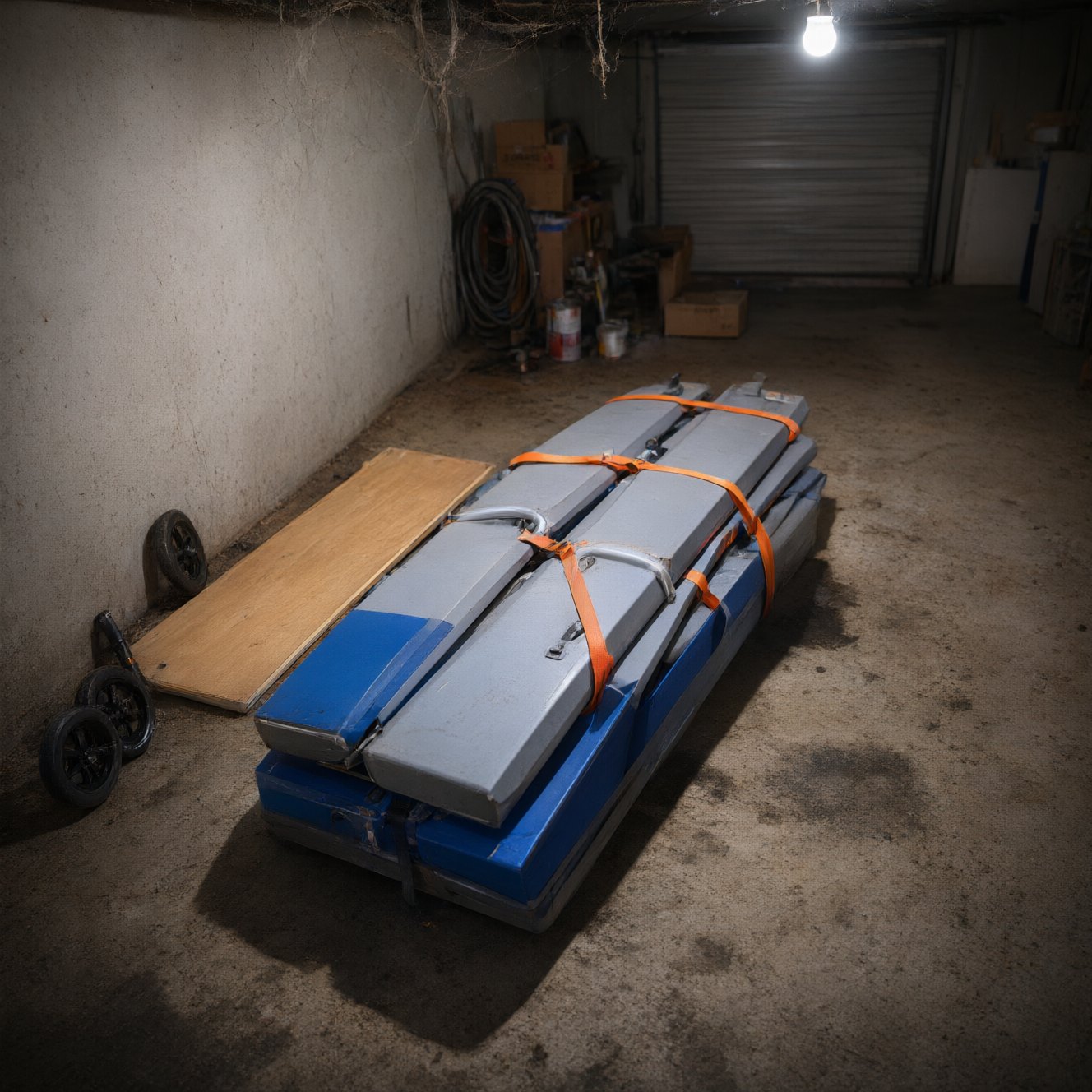
The folding boat collapsed flat and stacked against a garage wall, showing how little floor space it takes
Stored flat against a wall between trips.
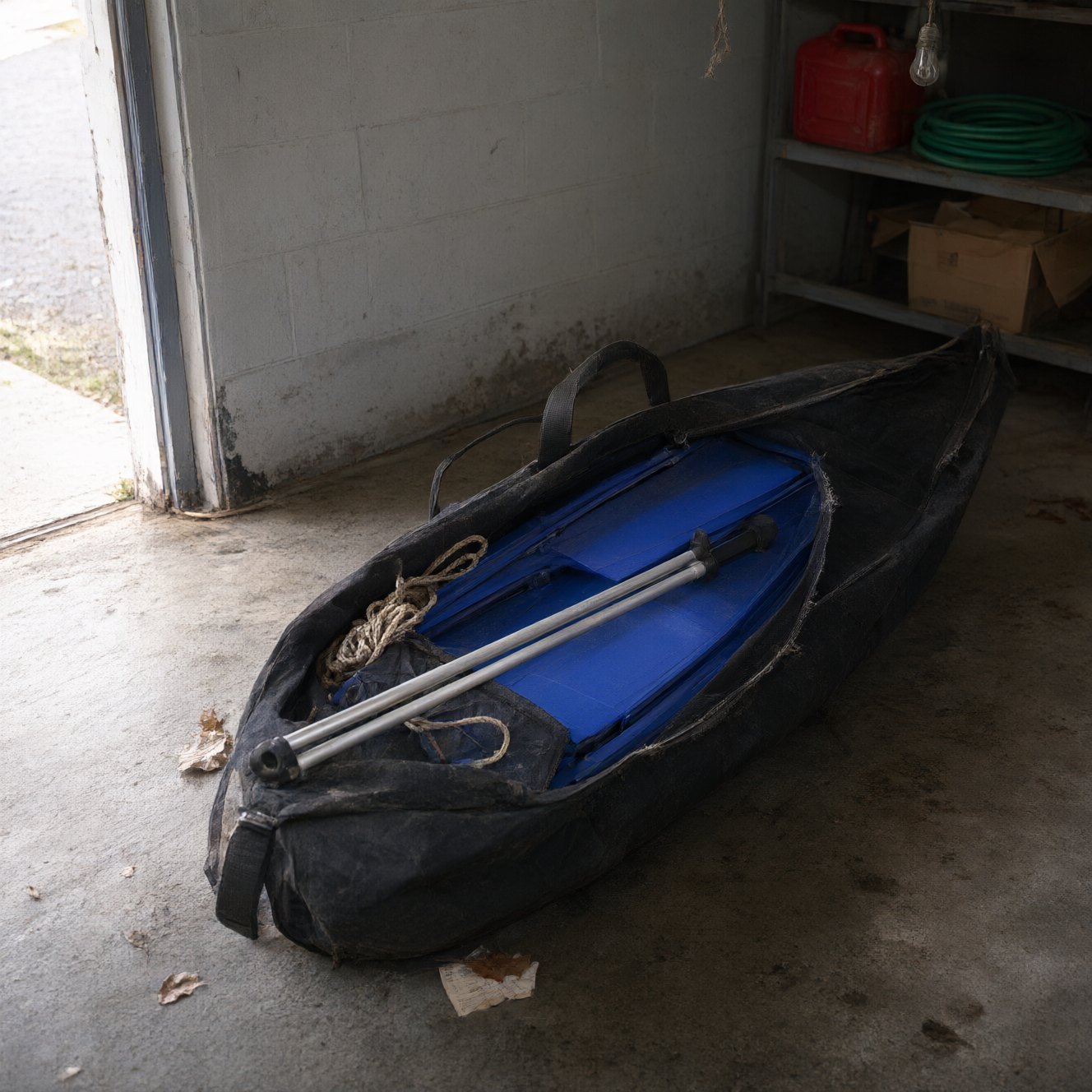
Padded carry bag containing the folded boat standing upright
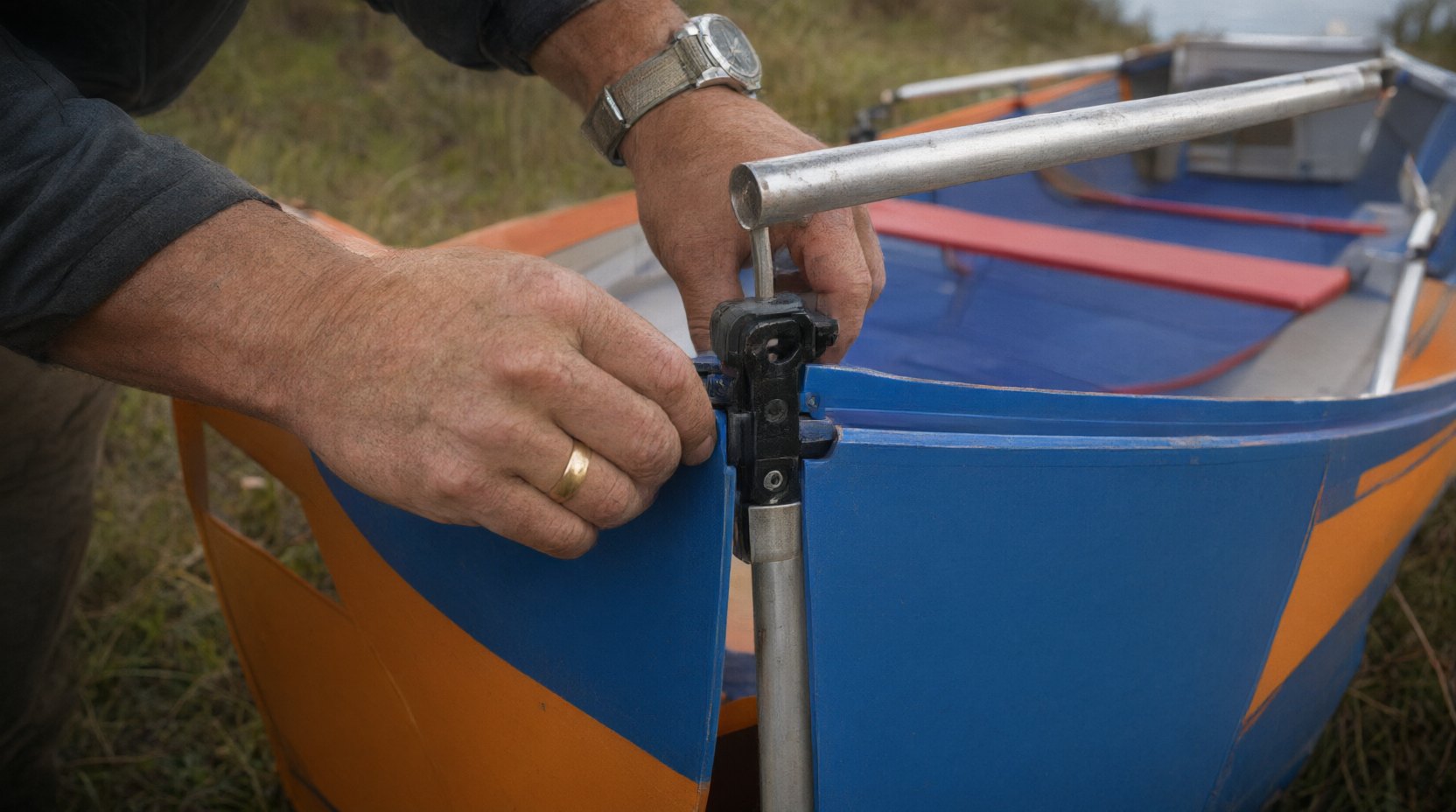
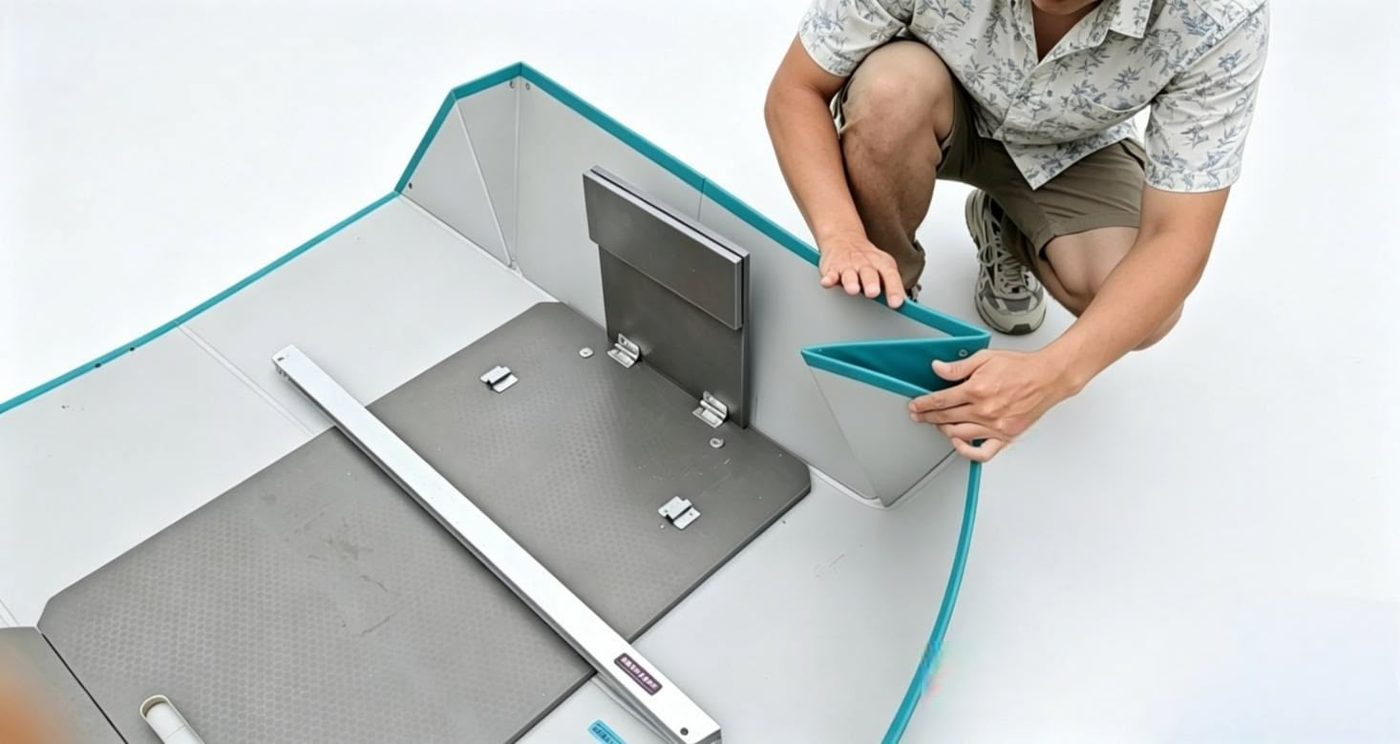
Two hands locking a hull panel into place with a quick fastener, no tools needed
100 × 60 × 32 cm folded Detachable wheels No tools

Use

Where you launch without a ramp

Estuaries, dams, rivers and sheltered bays are all fair water. Because the hull is rigid and needs no inflation, you launch from a bank, a jetty, a beach or a grassy edge where there is no boat ramp at all. Shallow water, bank mud and rocky entries are all workable.

The folding boat drifting quietly through a narrow mangrove creek on a rising tide
Mangrove creeks and tidal flats.
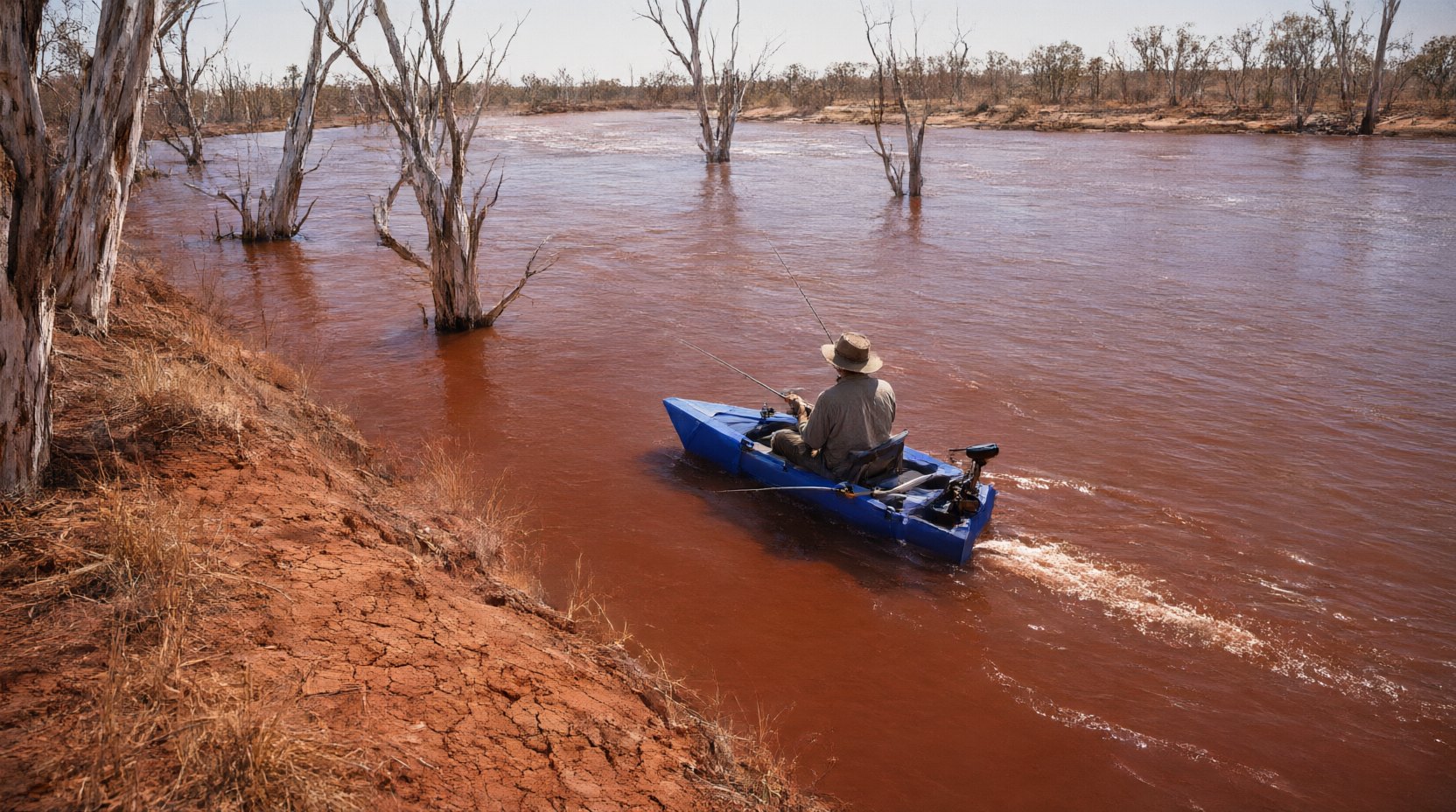
An angler fishing from the folding boat on a wide outback river with red soil banks
Inland rivers and wide runs.
The folding boat anchored in a sheltered coastal estuary over clear shallow water at low tide
Sheltered estuaries and sandbars.

Specifications

Specifications and construction

Built from the factory handbook. These are the maker's own specification drawings and product shots, not renders. They show the parts you actually receive, how the hull is put together and what fits where. Every figure here comes from the current handbook.

On the water
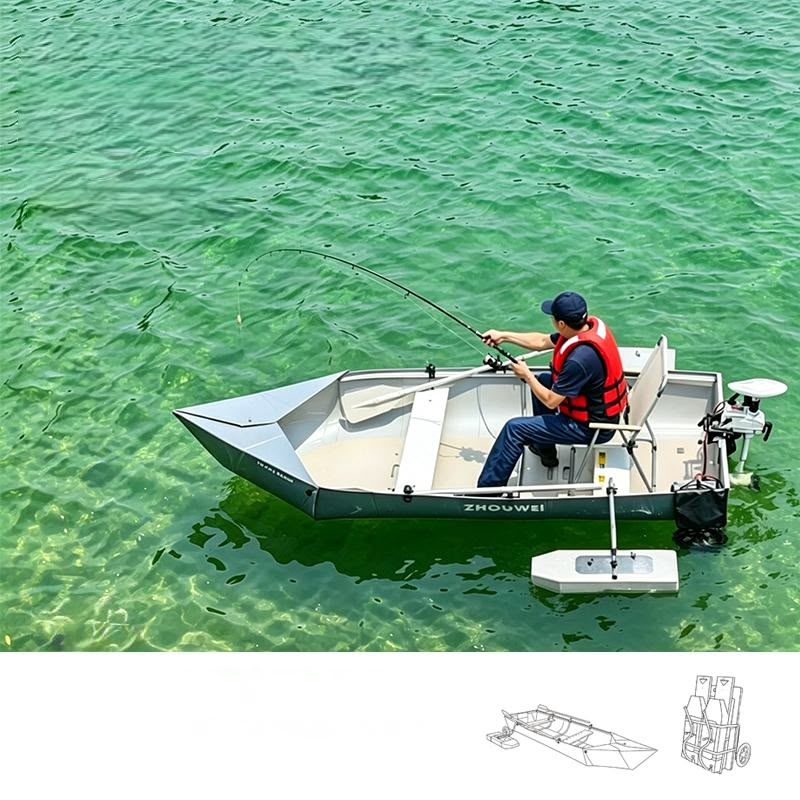
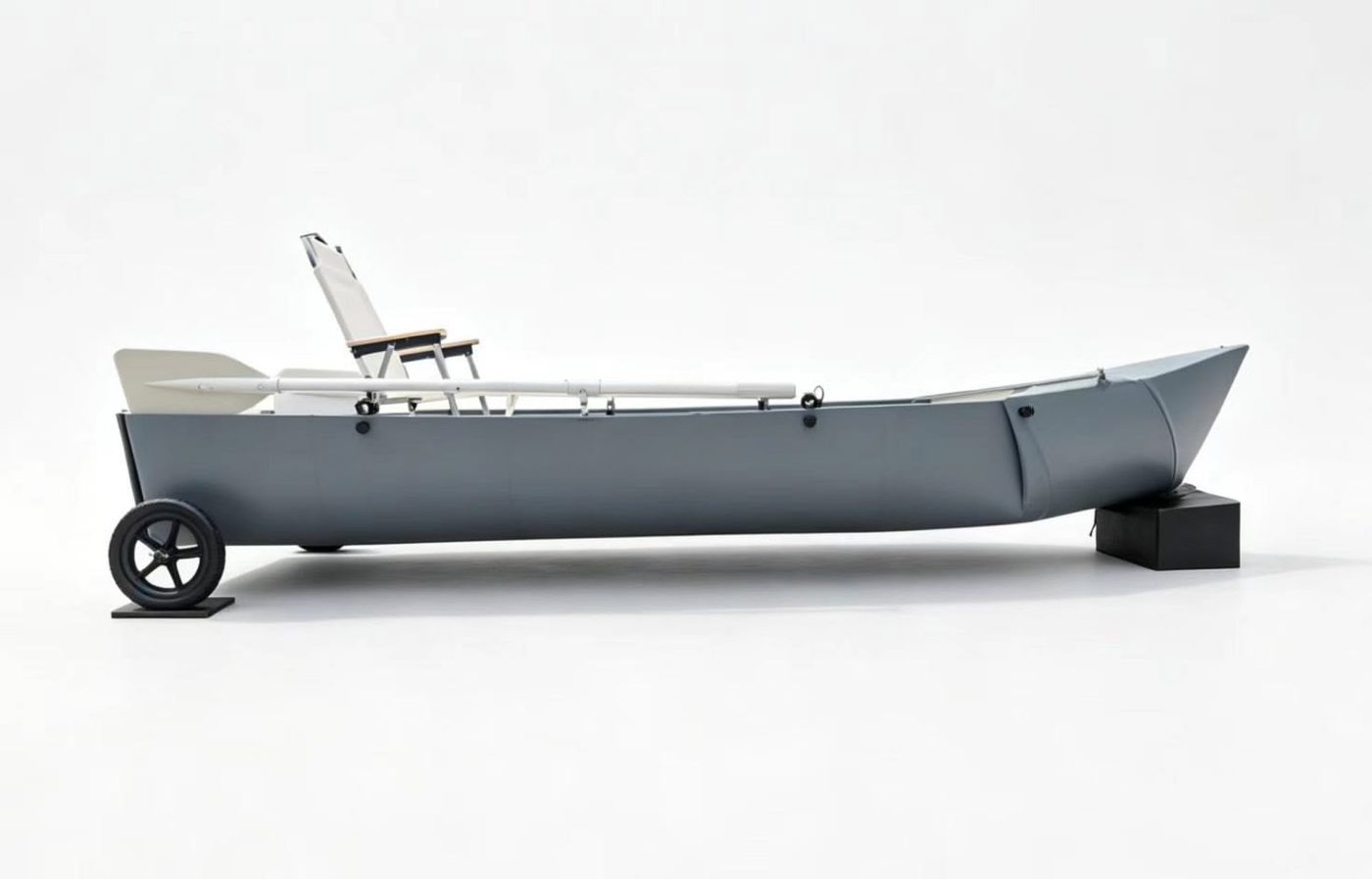
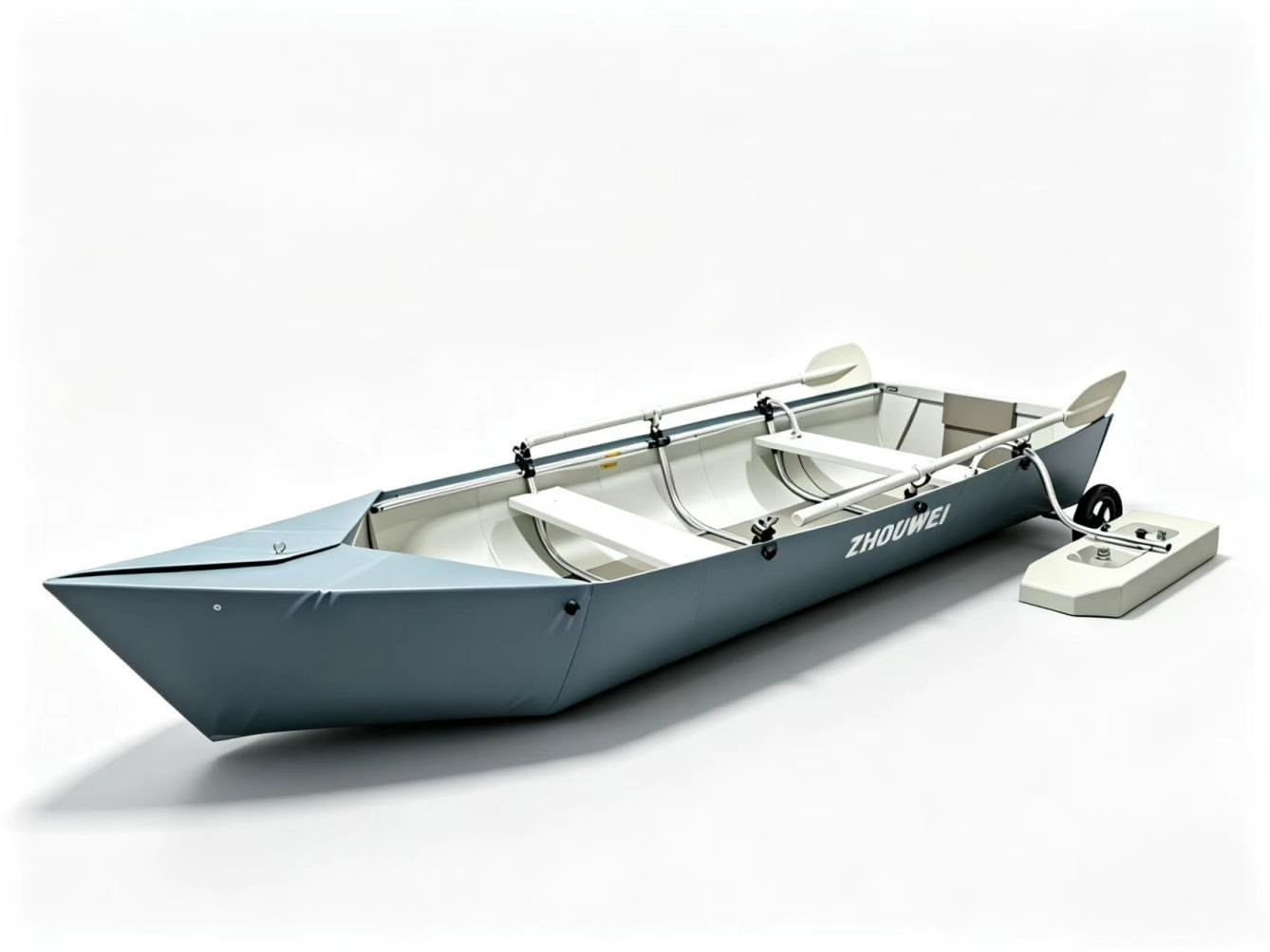
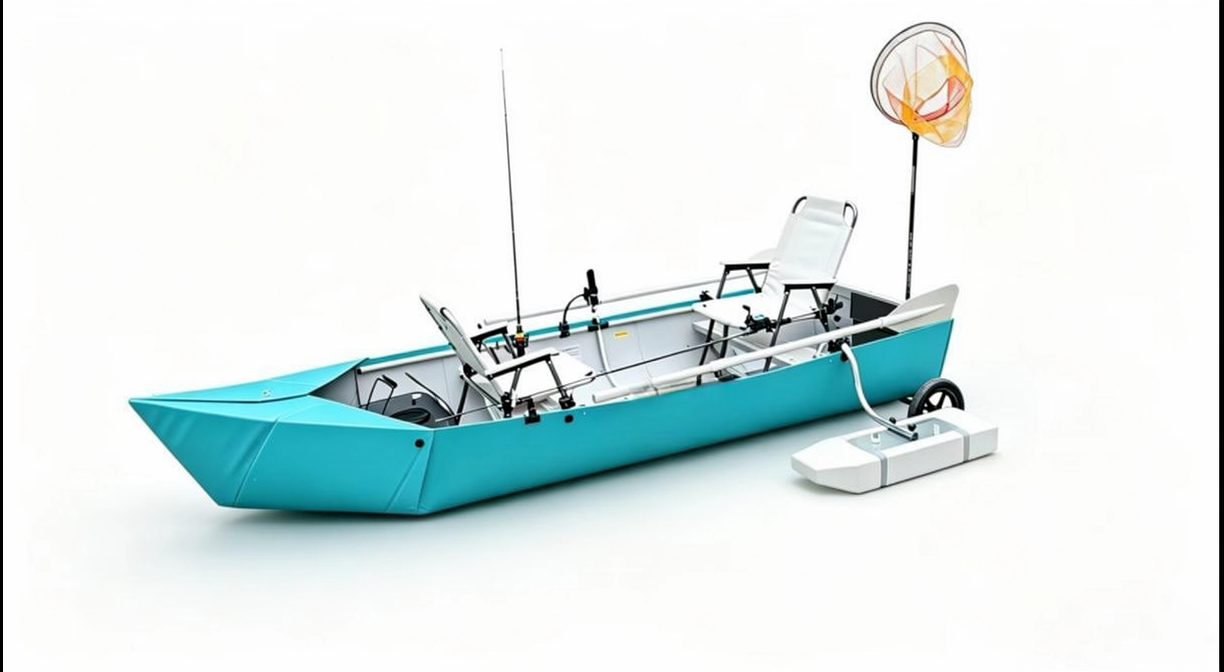
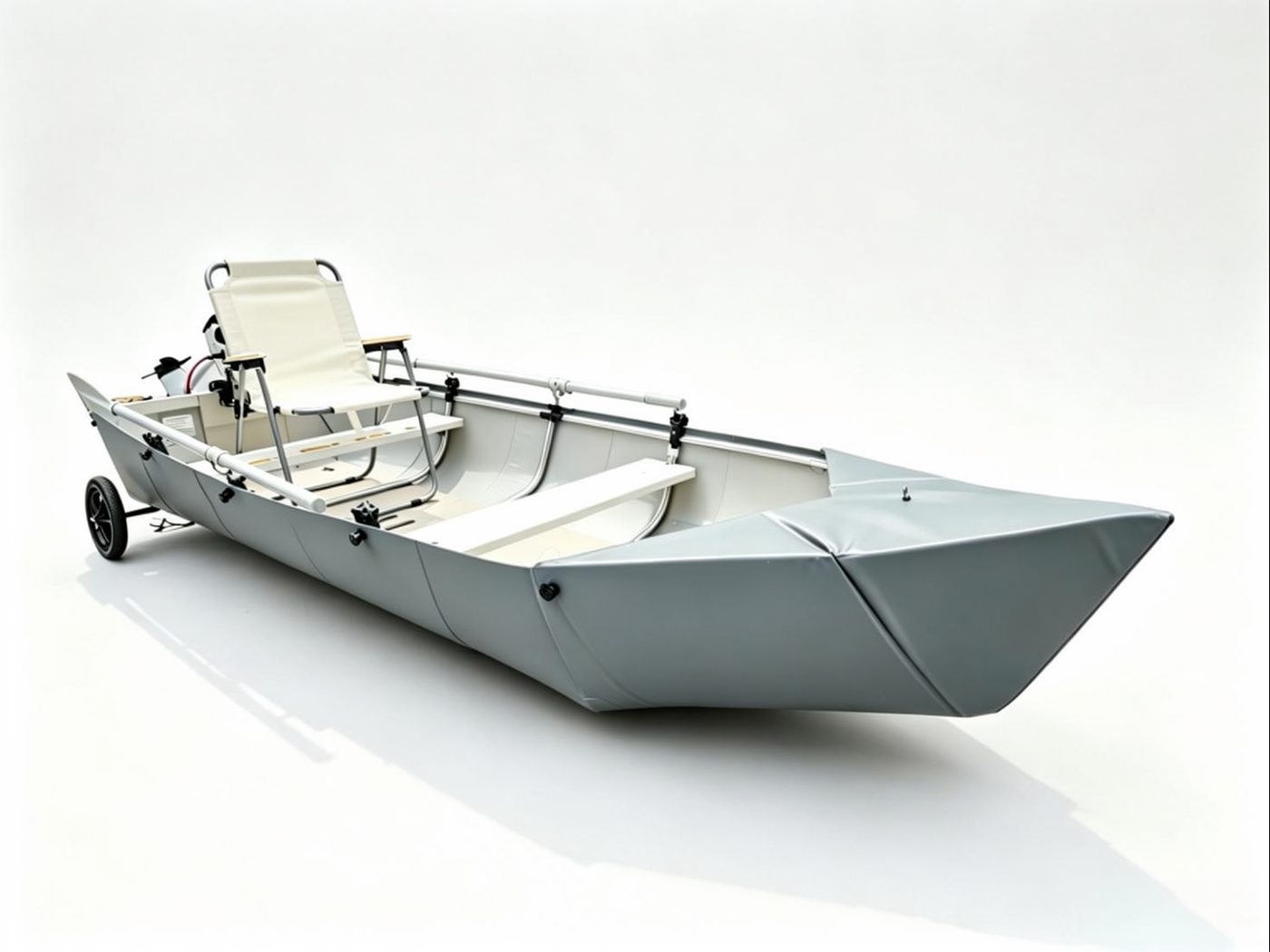
On the waterThe finished boat: hard floor, no inflation, stable enough to stand and cast from.
Dimensions
DimensionsHull 3.10 m long, 1.20 m wide, 0.35 m deep. 2.10 m beam across the outrigger floats.
Folded, on wheels
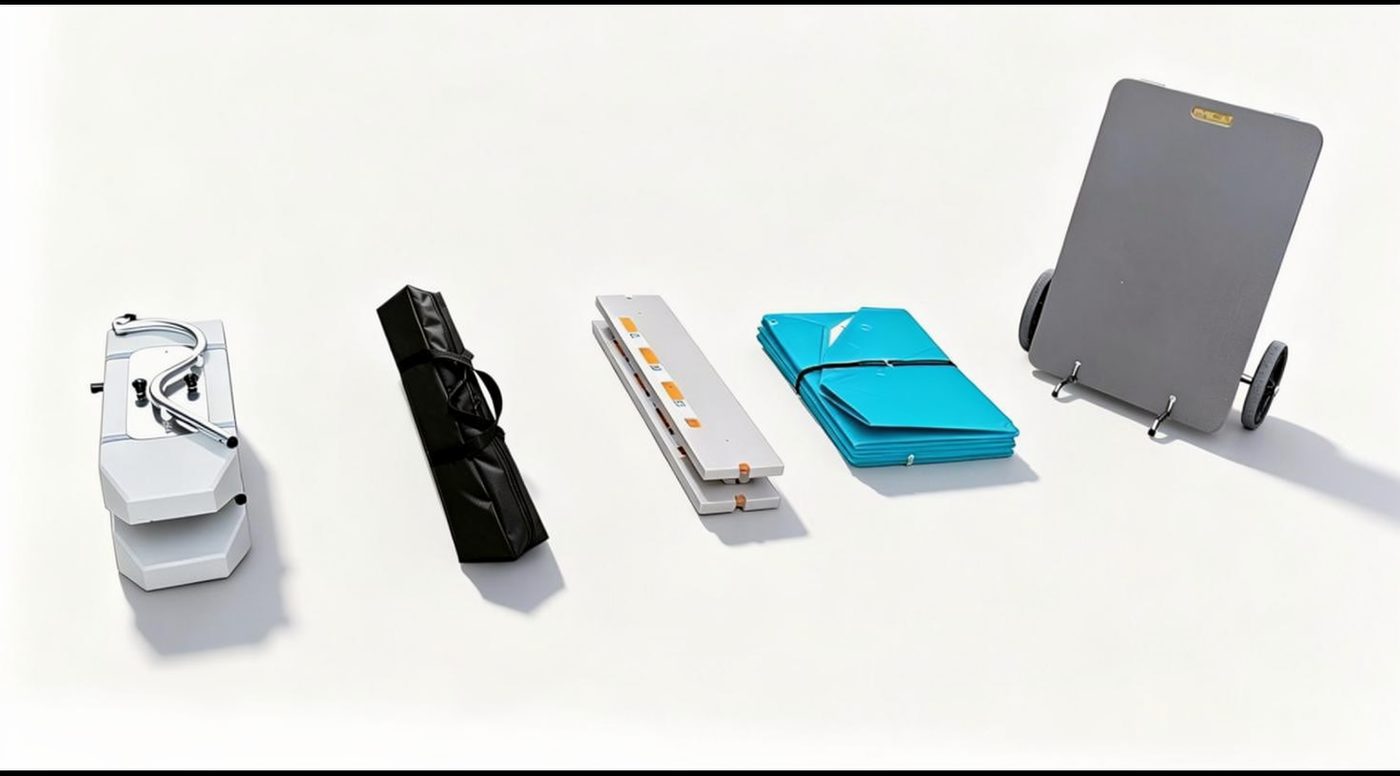
Folded, on wheelsFolds to 100 x 60 x 32 cm and rolls on a pair of detachable wheels.
Storage bag
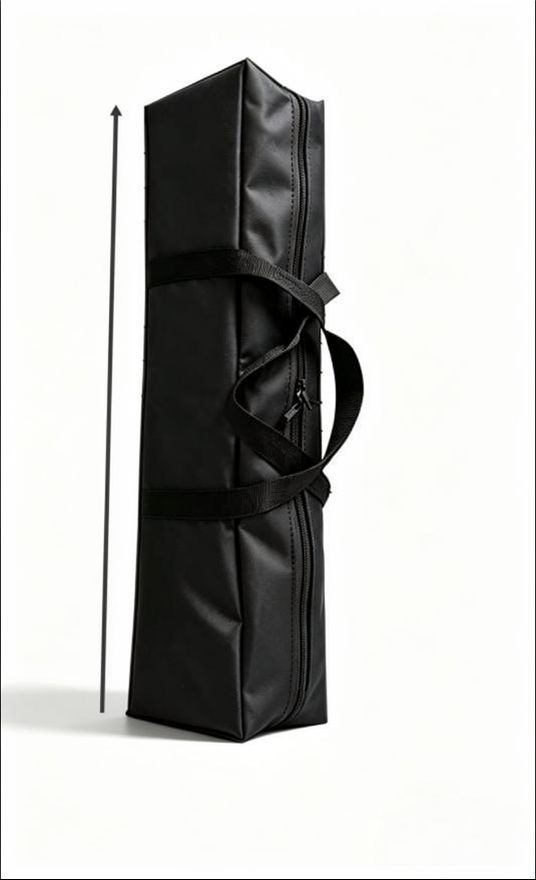
Storage bagThe aluminium frame packs into a 120 x 25 x 25 cm bag, about 115 cm of occupied length.
Four-layer hull panel
Four-layer hull panelOuter PVC tarpaulin, waterproof adhesive layer, fibre-reinforced polypropylene board, inner PVC tarpaulin.
Three-longitudinal, four-transverse frame
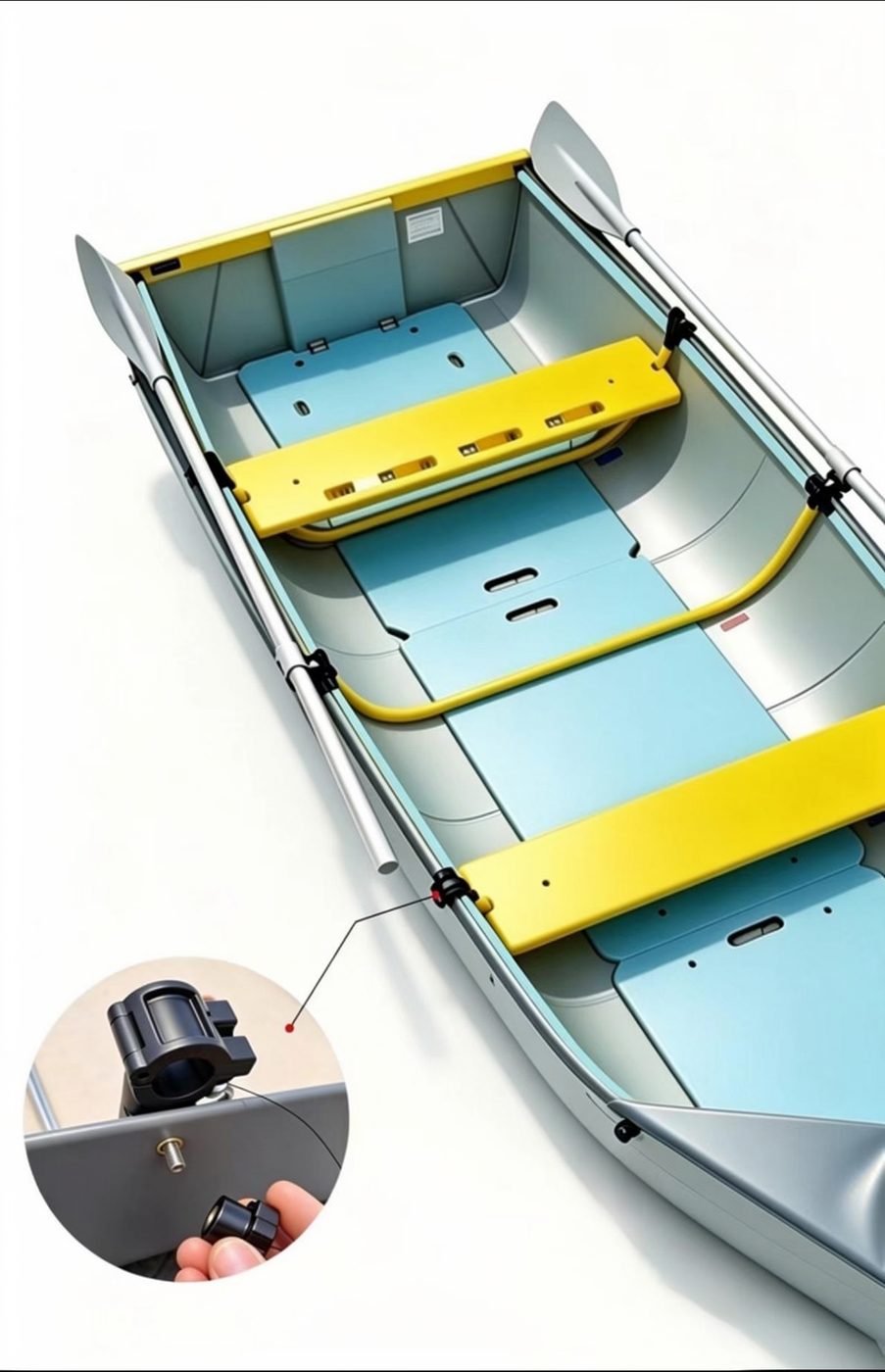
Three-longitudinal, four-transverse frameAluminium alloy and fibre-reinforced nylon with quick-setup, anti-lost nuts and colour-coded assembly markers, bolted to the hull through pre-drilled holes.
Colour-coded assembly
Colour-coded assemblyAssembly markers make the frame positions obvious, so you are not guessing which rail goes where.
Quick folding creases
Quick folding creasesReinforced fold lines flex across the same crease again and again without splitting.
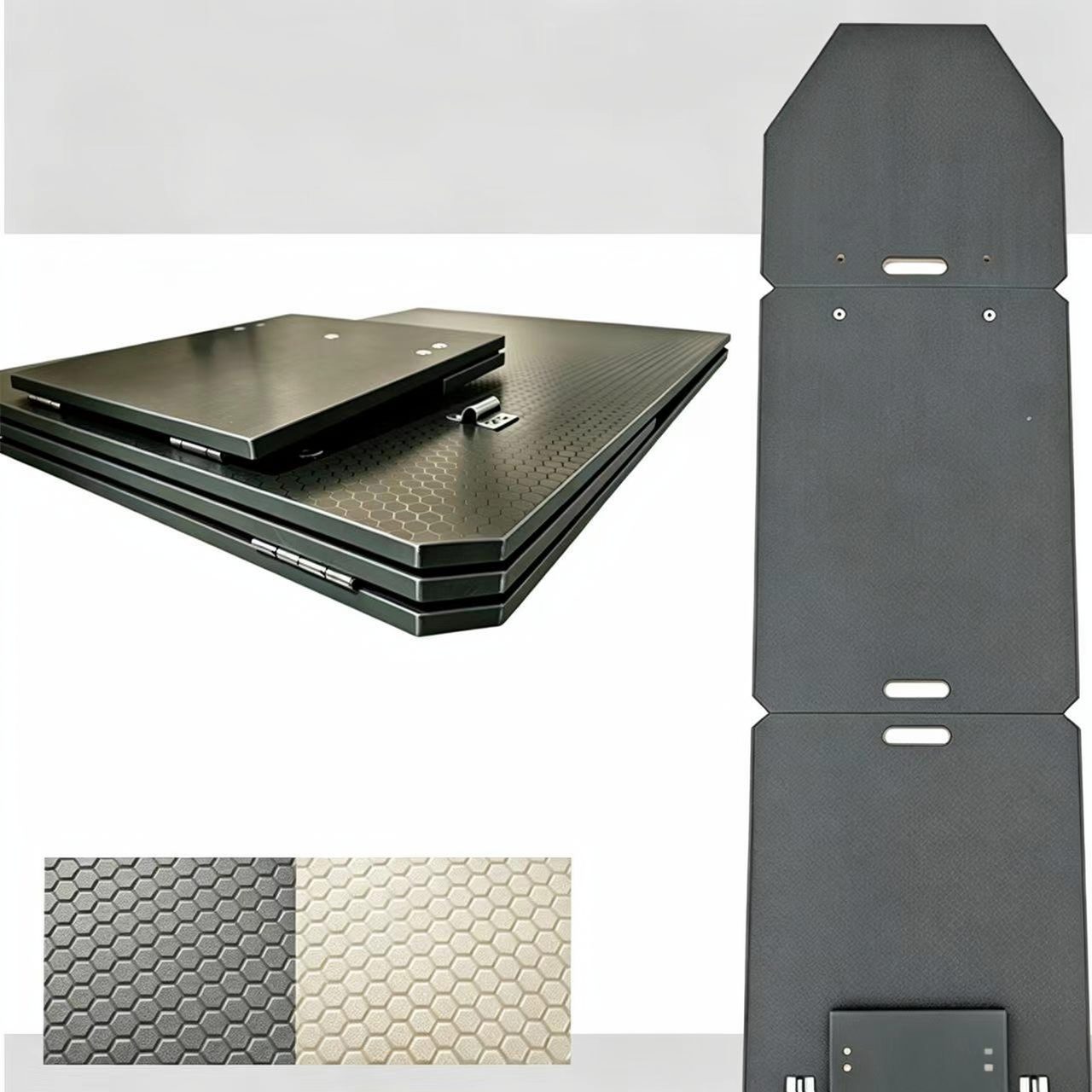
Marine plywood deck
Marine plywood deckMarine-grade waterproof birch plywood, triple-fold, with an anti-slip surface that spreads your weight across the hull.
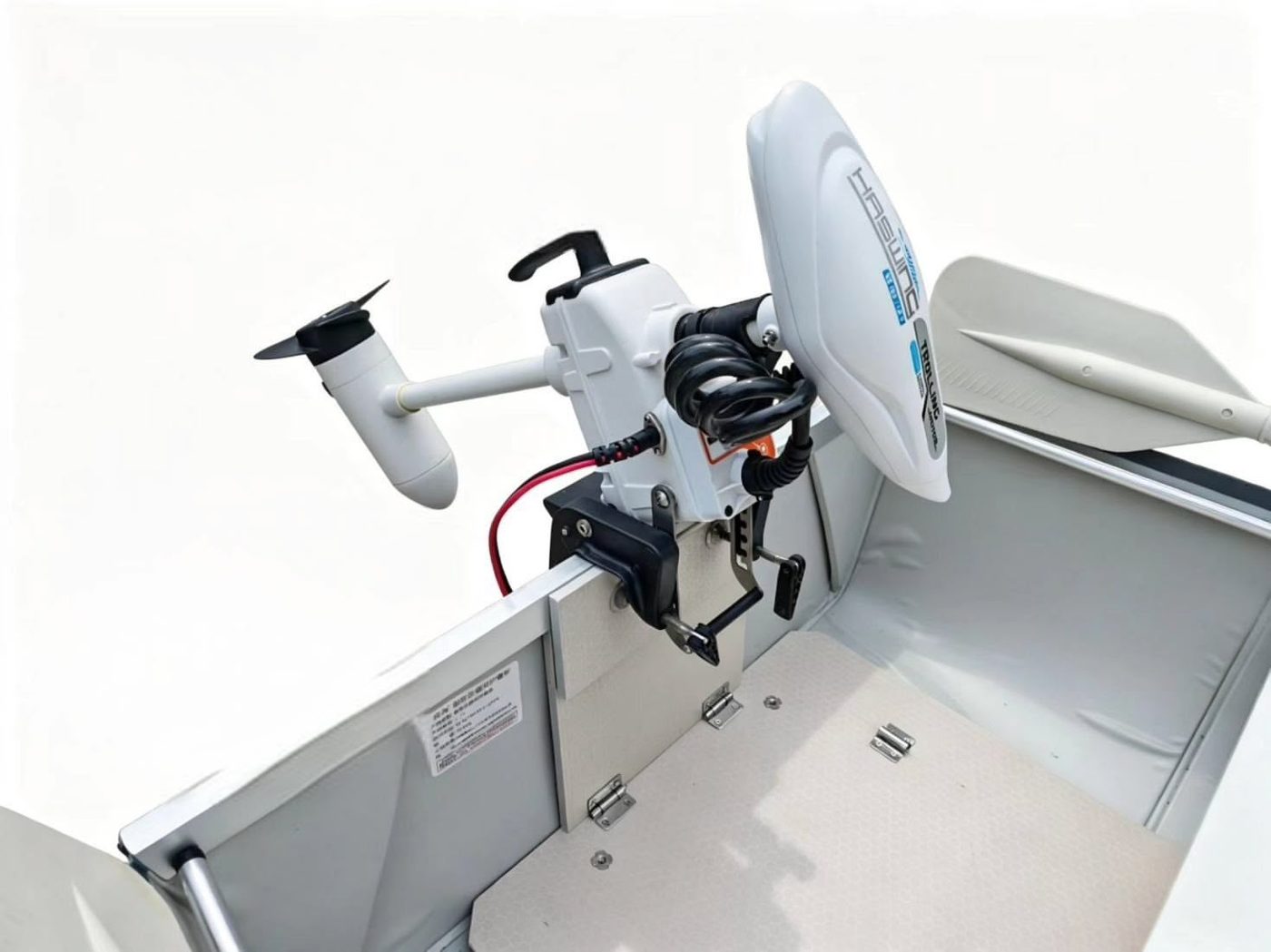
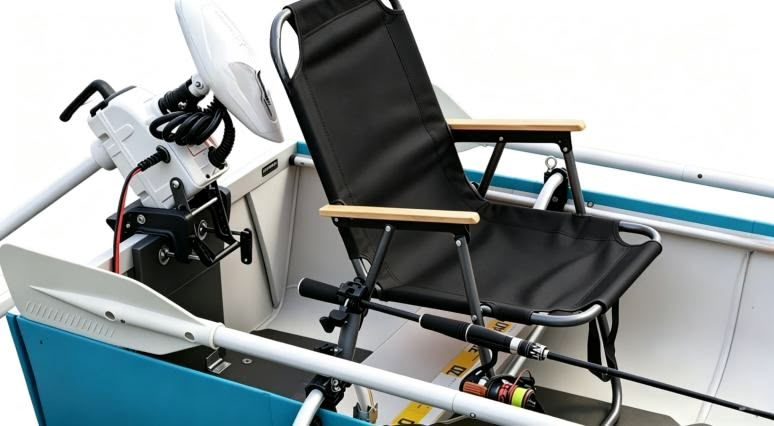
Stern power mount
Stern power mountTakes a small outboard or an electric trolling motor, mounted at the stern.
Bow power option
Bow power optionBow mounting is also available, laid flat rather than hung vertically.
Outrigger floats
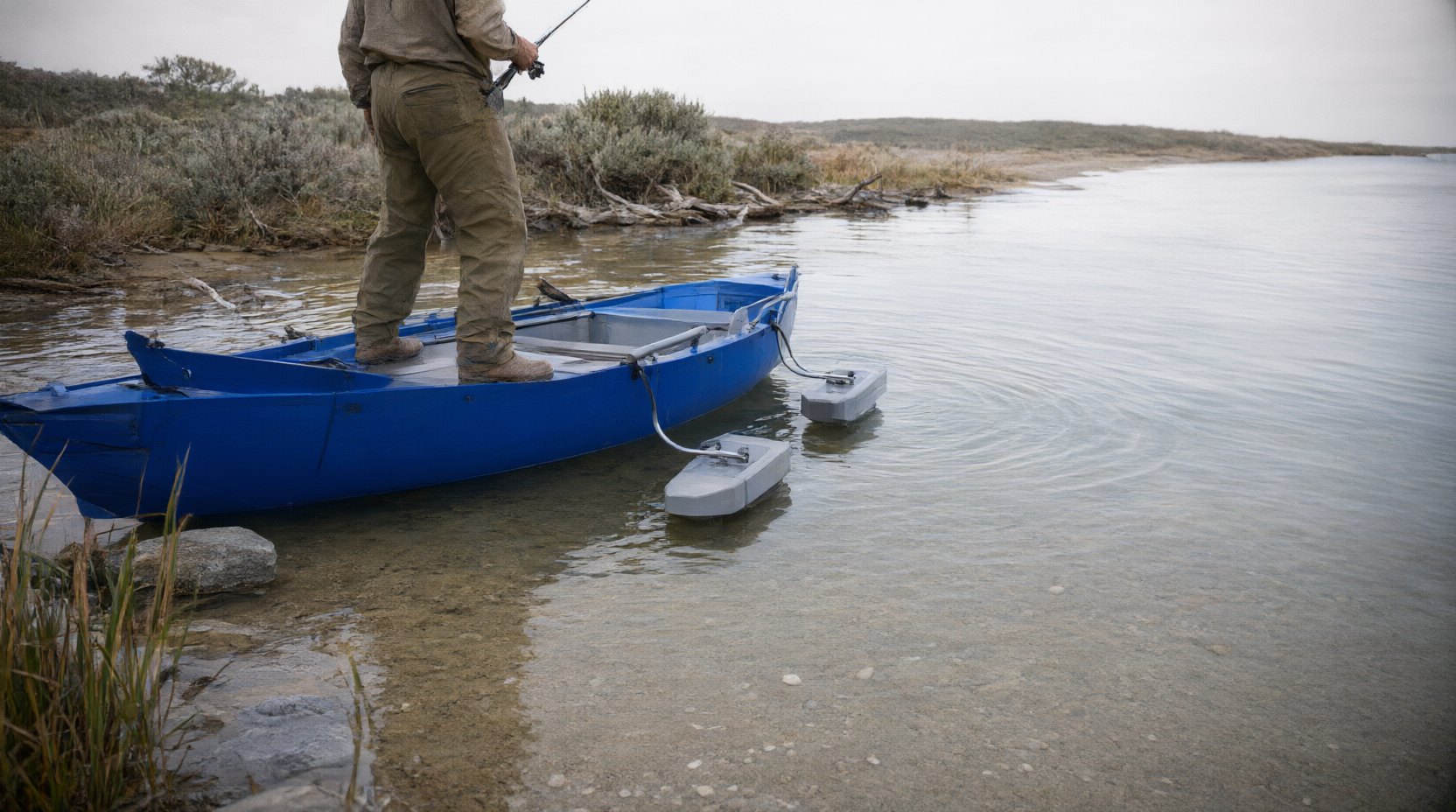
Outrigger floatsTwo floats come as standard and mount either side of the rear seat panel to resist capsize.
Floats fitted
Floats fittedWith the floats on, beam goes to 2.10 m, the widest and most stable configuration.
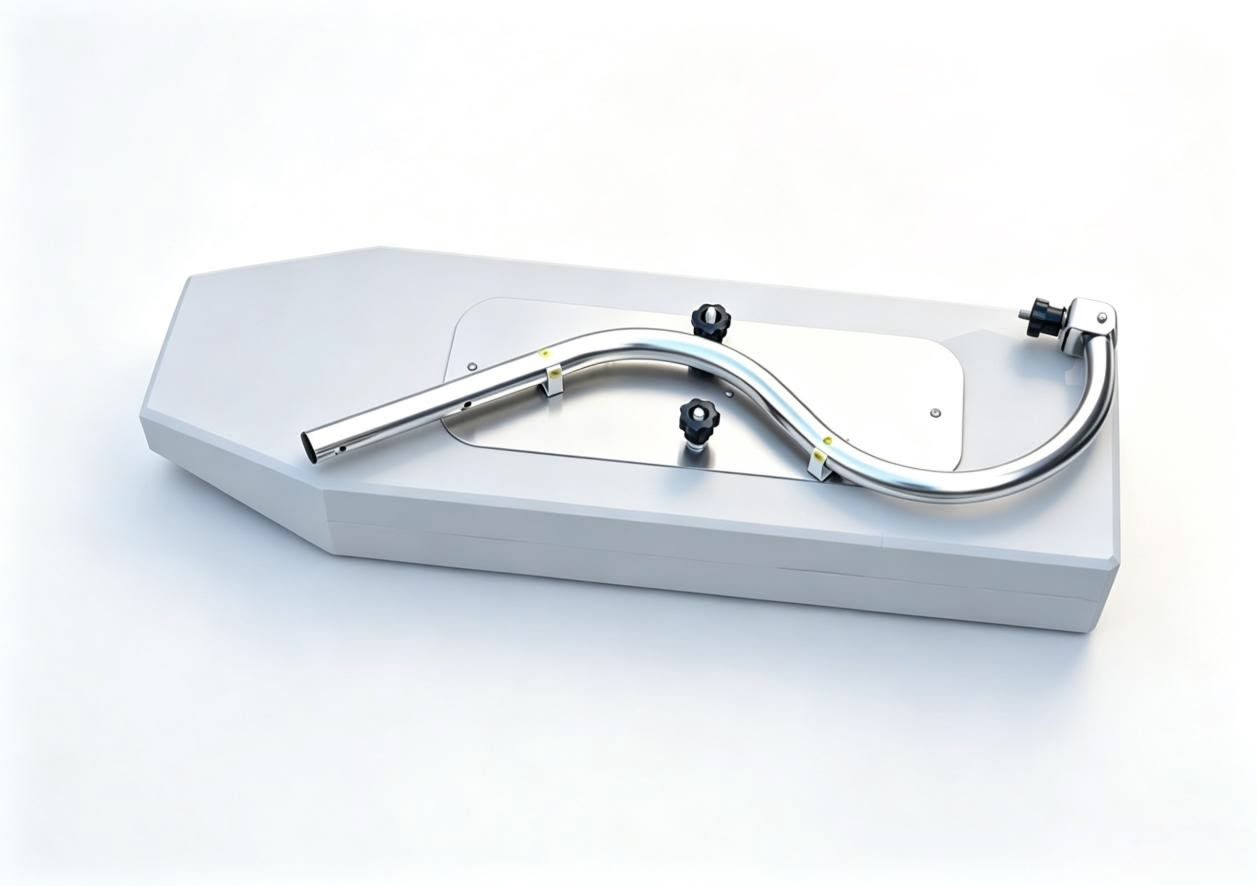
Accessory rails
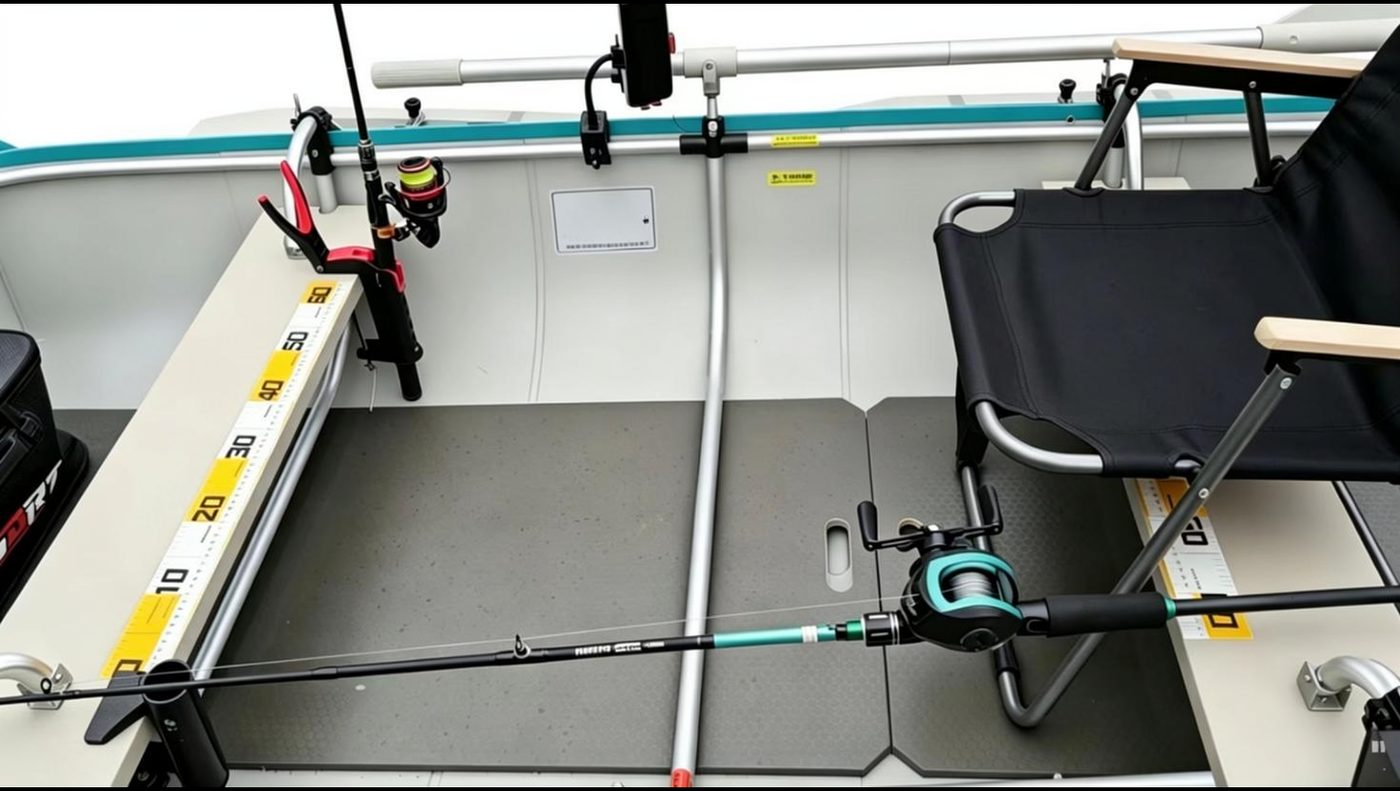
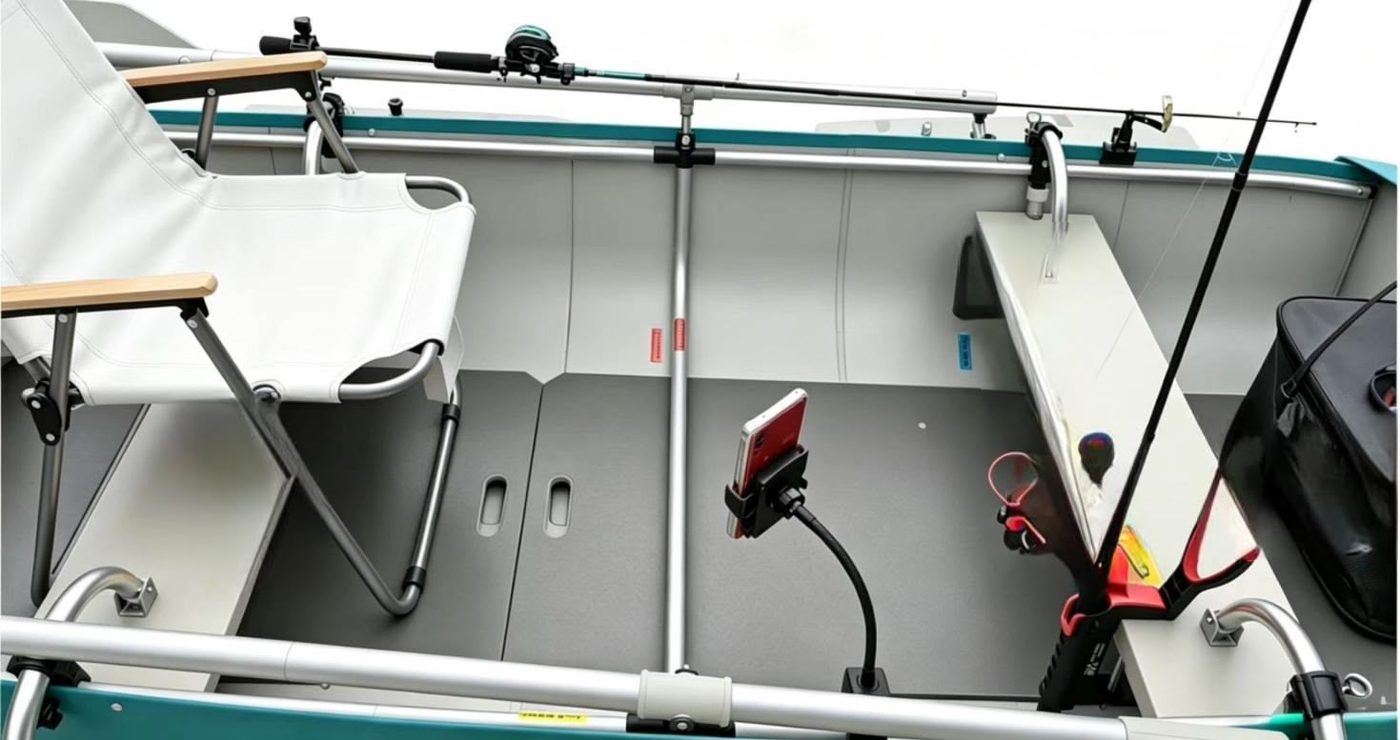
Accessory railsTubular, curved, flat and vertical mounting points run through the hull for rod holders and gear.
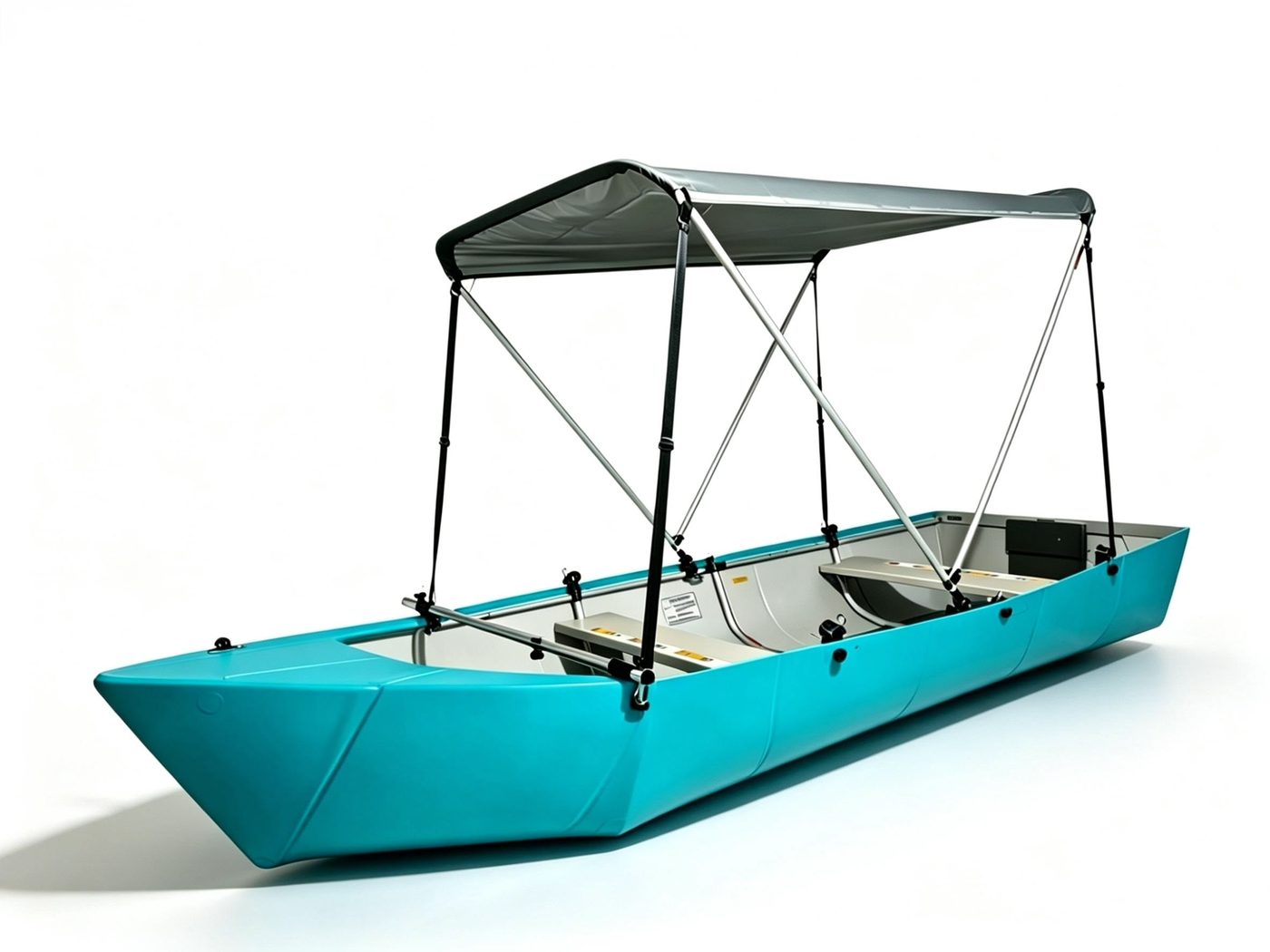
Bimini shade
Bimini shadeAn optional shade canopy mounts to the rail system.
Seat positions
Seat positionsThe seat boards are repositionable, so you can trim the boat for how you are fishing that day.
Layout, aft
Layout, aftSeat and deck layout looking aft, with the floats mounted.
Rod holders
Rod holdersRod holders and seat mounted on the rail system.
Fishing layout
Fishing layoutOpen deck with room to move, a place for your gear, and a transom for a motor.
In a sedan boot
In a sedan bootFits a sedan boot without a trailer and without a roof rack.
In an SUV
In an SUVThe panels spread through the boot so no single piece is awkward to lift.
Carry one piece at a time
Carry one piece at a timeSplit the load into separate panels so one person can handle it without help.

Questions

Questions about the foldable fishing boat

How long does assembly take, realistically?
Unfolding the hull takes a few minutes. Then the bottom board drops in, and the seats and transom bracket follow. Speed depends mostly on practice and conditions. We are not going to quote you a single marketing number: your first assembly will be slower than a routine launch, so allow more time on your first trip out.
Can you stand and cast from it?
Yes. The hull is a four-layer composite panel with a rigid fibre-reinforced polypropylene core, so the floor does not flex underfoot the way an inflatable does. The marine-grade plywood bottom board spreads your weight across the hull. As with any small boat, distribute your weight sensibly and watch the conditions.
Can I fit a motor, and do I need registration?
The transom accepts a small outboard or an electric trolling motor. In Australia, boats fitted with a motor of 3 kW (about 4 hp) or more require registration in some states and territories. Rules differ by jurisdiction, so check your local maritime authority before you launch. We will tell you the transom rating for the model you choose.
Will it fit in a normal car?
Folded, the hull measures about 100 × 60 × 32 cm. It rolls on detachable wheels, so one person can move it from the car to the water. It fits most hatchbacks, wagons and SUV cargo areas. Measure your own boot or tray before ordering if space is tight.

Spec sheet and build video

Choose your length and get on the water

Three models cover one angler to two. Pick the length that suits your water, add the stabiliser floats and transport wheels, and the boat folds into the back of your car.

L-22 · 2.15 m L-27 · 2.65 m L-31 · 3.10 m

We send the spec sheet and a build video. No spam, unsubscribe any time. We will not sell your details.